Most beautiful small birds - Sykalo Eugen 2024
Indian Roller (Coracias benghalensis)
Where open skies meet ancient trees, an azure blaze somersaults through sunbeams—the Indian Roller, a sapphire acrobat painting the air with cerulean brushstrokes.
Here's the detailed description using the requested algorithm:
Identification:
- Species name: Indian Roller
- Scientific name: Coracias benghalensis
- Family: Coraciidae (Rollers)
- Order: Coraciiformes (Rollers, kingfishers, bee-eaters)
- Subclass: Neornithes (Modern birds)
- Class: Aves (Birds)
Oh, my goodness, have you ever just stopped in your tracks, caught by a flash of brilliance, and felt your whole world just… pop with color? Because that, my friends, is precisely what happens when you encounter the Indian Roller, or Coracias benghalensis. This isn't just a bird; it's a living, breathing confetti canon of the avian world, a feathered jewel box sprung open in the tropical sun! And let me tell you, I've always felt a bit like a bird at heart, which is why their stories just grab me, pulling me into their vibrant worlds.
Just imagine: you're walking through a sun-drenched Indian landscape, and suddenly, there it is! A bird perched with an almost regal air, but then it takes flight, and whoosh! You're hit with an explosion of iridescent blues, purples, and browns, a kaleidoscope unfurling against the sky. It's like the rainbow itself decided to sprout wings and perform an aerial ballet, just for you! This isn't just pretty; it's a spectacle, a vibrant invitation to step into its utterly charming world.
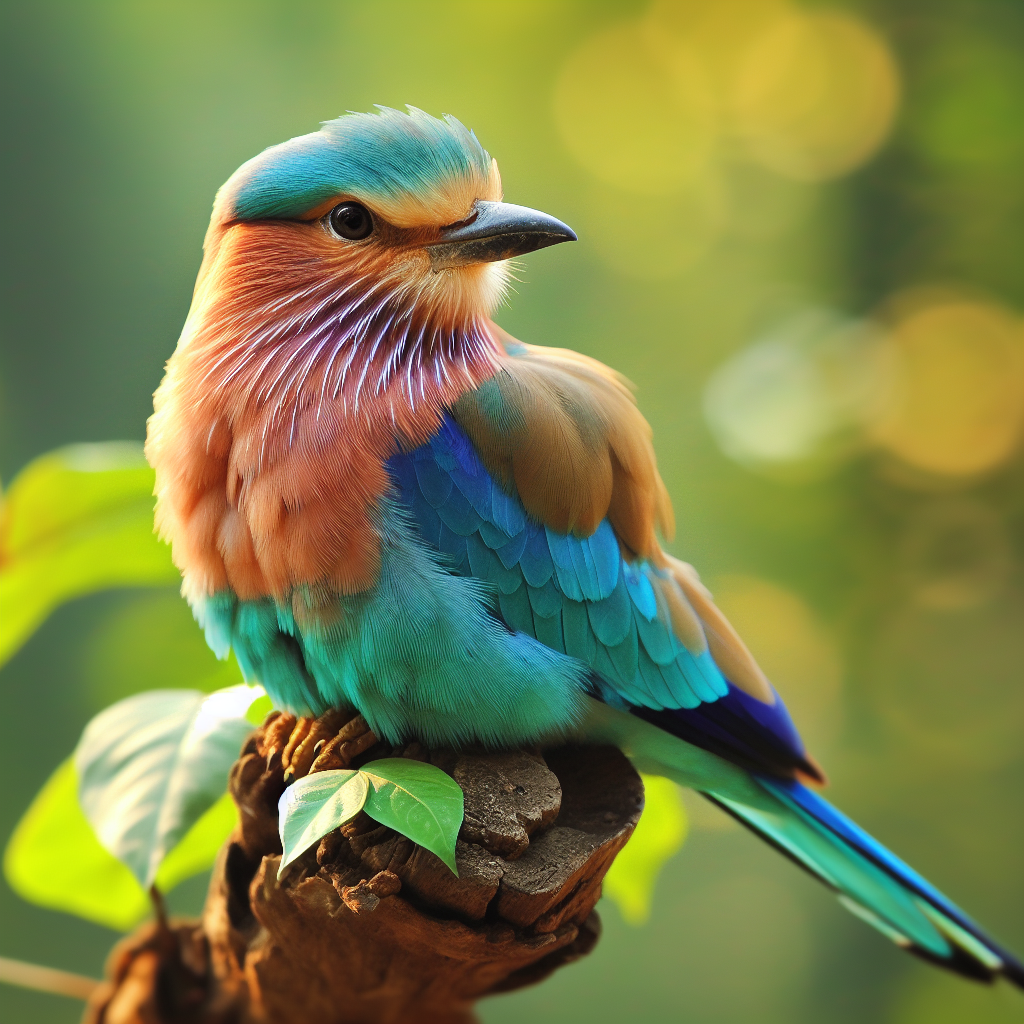
A Living Painting: Feathers and Form
Let's talk about its outfit, shall we? Because the Indian Roller doesn't just wear colors; it embodies them. Its crown and hindneck shimmer with a purplish-blue, deepening to a rich azure on the rump and upper tail-coverts. The breast is a warm, earthy brown, contrasting wildly with those unbelievable bright blue wing and tail patches. Honestly, it's as if a master painter decided to use every single shade of blue on their palette, then sprinkled in some warm earth tones for good measure. There's no real difference between the males and females in their plumage — they're both equally dazzling, which, in a world where some birds reserve the flashiest attire for the boys, feels wonderfully egalitarian!
Now, for the nitty-gritty, but still exciting details. The Indian Roller is a compact powerhouse, typically measuring about 30-34 centimeters (around 12-13.5 inches) from beak to tail-tip. Its wingspan can stretch to a respectable 65-70 centimeters (about 25-27 inches), giving it that broad, almost boomerang-like silhouette in flight. And weight? A modest 160-170 grams (around 5.6-6 ounces). These aren't just numbers; they're the blueprint for an aerial acrobat! That powerful wingspan, combined with its relatively light body, allows for those incredible, almost gravity-defying rolls and dives that give it its name. It's not just flying; it's dancing in the air, a tiny, feathered daredevil!
And its beak? It's a marvel of efficiency! Stout and slightly hooked, it's perfectly adapted for snatching up insects mid-air or off the ground. Its legs are short but strong, ideal for perching upright on branches, wires, or even the back of grazing cattle — talk about having a mobile hunting platform! Its tail is somewhat square-ended, contributing to its stable yet agile flight. Every single feather, every curve of its body, is a testament to millions of years of evolution, a finely tuned instrument designed for survival and, let's be honest, for showing off a little! It’s like nature’s superhero, with its own specialized gear for every mission!
Home Sweet Home: Ecology and Range
Where does this feathered marvel hang its hat? The Indian Roller is a true cosmopolitan of its particular world, thriving in a fascinating array of habitats. You’ll find it gracing open woodlands, agricultural fields, scrub forests, and even urban parks and gardens. It’s not picky, as long as there are scattered trees for perching and open ground for hunting. This adaptability is utterly captivating — it’s a bird that doesn’t just survive; it flourishes amidst human landscapes, a testament to its resilience and opportunistic spirit. My grandma always used to say, "The truly adaptable ones are the ones who find joy wherever they land," and I swear, she must have been thinking of the Indian Roller!
Geographically, its domain stretches across a vast swathe of Asia, from Iraq and the Arabian Peninsula through the Indian subcontinent, Sri Lanka, and eastward to Southeast Asia. It’s like a vibrant ribbon tying these diverse landscapes together! The reasons for its wide distribution are tied to its generalist nature — it doesn't demand pristine wilderness; it finds its niche in modified environments, happily coexisting with us humans. This broad distribution also means it interacts with a rich tapestry of other species, from the insects it hunts to the larger predators that might occasionally eye it. It’s a crucial thread in the ecological fabric of these regions, a constant, vivid presence.
The Life of the Party: Behavior and Ethology
So, what’s on the menu for our vibrant friend? The Indian Roller is primarily an insectivore, a true connoisseur of the creepy-crawlies! It loves grasshoppers, crickets, beetles, and even scorpions — talk about a brave palate! It’s an expert perch-and-pounce hunter, sitting patiently on a high vantage point — a branch, a power line, a fence post — scanning the ground below with those sharp, keen eyes. Once it spots a tasty morsel, it swoops down in a flash, grabs its prey, and often returns to its perch to dispatch it. It's like a tiny, feathered sniper, but with all the flair of a circus performer! This aerial hunting style plays a vital role in controlling insect populations, making it an unsung hero of many agricultural landscapes.
And its voice? While not as melodic as some songbirds, the Indian Roller has a distinct, rather harsh, and raucous call — often described as a "chak" or "chaak" sound. It's not a true jazz solo played on the morning dew, more like a confident, almost assertive shout across the plains. These calls are used for communication, especially in territorial disputes or for alerting others to a predator. It’s not about beauty; it’s about making a statement, about marking its presence in a world teeming with life.
Now, for the truly heartwarming part: reproduction! Indian Rollers are cavity nesters, which means they seek out cozy, secure hollows for their precious eggs. They often choose holes in trees, crevices in old buildings, or even abandoned nest holes of other birds like woodpeckers. They’re quite resourceful, aren’t they? The nest itself is usually a simple affair, often just a few twigs, grass, and feathers lining the cavity. The female typically lays 3-5 glossy white eggs, and both parents share the incubation duties, which last for about 18-20 days. Oh, the anticipation!
Once the chicks hatch, they’re utterly helpless, but they grow fast! Both parents are devoted, tirelessly bringing food to their hungry brood. The fledging period is usually around 30-35 days, and watching the young ones take their first wobbly flights is just pure joy, a tiny feathered triumph against the vast sky. It's a whole family affair, a beautiful testament to parental dedication.
Is it migratory? Not really. The Indian Roller is largely a resident bird across most of its range, preferring to stay put year-round. However, some populations in the northern parts of its range might undertake short, localized movements in response to food availability or harsh weather. But for the most part, once they find their patch of vibrant sky, they stick with it, enjoying the familiar rhythms of their home.
They’re not particularly social outside of the breeding season, usually seen alone or in pairs. They are quite territorial during nesting, fiercely defending their chosen patch of the world. But you might occasionally see small groups gathering at communal roosts, especially at dusk, a shimmering collection of jewel-toned silhouettes against the setting sun. It’s a subtle social structure, perfectly suited to their independent, predatory lifestyle.
Amazing Feats and Human Connections
One of the most astounding biological facts about the Indian Roller, and indeed all rollers, is their namesake "rolling" display flight! During courtship, the male performs breathtaking aerial acrobatics — dramatic dives, twists, and turns, often with an audible "whoosh" of wings, before performing a spectacular upside-down "roll" in mid-air. It's not just a flight; it’s a full-blown performance, a declaration of love painted across the sky! I mean, who needs a fancy dance floor when you have the entire atmosphere for your grand gestures?
And here’s a fun, perhaps a little quirky, fact: the Indian Roller is considered a sacred bird in some Hindu traditions, especially in certain parts of India. It’s often associated with Vishnu, and sightings of it, particularly on Dussehra (a major Hindu festival), are considered auspicious. Imagine a bird so striking, so ingrained in the cultural fabric, that its very presence brings good fortune! It’s a wonderful example of how wildlife can intertwine with human belief and folklore, adding another layer to its already rich story. One time I was watching an Indian Roller on a power line, and I swear, it winked at me when it caught that beetle! Perhaps it was a little blessing from above!
A Bright Future: Conservation and Protection
Is this dazzling bird endangered? Thankfully, no! The Indian Roller is currently classified as "Least Concern" by the IUCN. Its adaptability to various habitats and its wide distribution have helped it maintain a healthy population. It’s a testament to how some species, even with increasing human activity, can find ways to thrive.
However, "Least Concern" doesn't mean "no concern." Like all wildlife, they face localized threats from habitat loss due to urbanization and intensive agriculture, pesticide use (which impacts their insect prey), and occasionally, illegal trapping for the pet trade. But there are positive conservation measures in place. Awareness campaigns are crucial, teaching people about the importance of these birds in the ecosystem. Protecting older trees, which provide vital nesting cavities, and promoting sustainable agricultural practices that reduce pesticide use are also key.
It’s about understanding that these vibrant creatures aren’t just pretty faces; they're integral parts of our natural world, helping to maintain ecological balance. Each of us can help by supporting conservation organizations, choosing sustainably produced food, and simply appreciating the wonders of the birds around us. When we connect with nature, we’re not just observing; we’re participating in its preservation. It’s a joyful collaboration, a shared journey towards a more vibrant planet!
So, the next time you cast your gaze skyward, keep an eye out for a flash of sapphire, indigo, and azure. The Indian Roller isn't just a bird; it's a living celebration, a constant reminder of the sheer, unadulterated beauty that exists all around us, often in the most unexpected places. It’s a whisper of magic, a vibrant burst of joy, and a testament to the endless wonders that unfurl when we simply take a moment to look, to listen, and to truly see. And honestly, doesn't that just make your heart sing? Mine certainly does!