Most beautiful small birds - Sykalo Eugen 2024
Plumbeous Sierra Finch (Carpodacus plumbea)
Identification:
- Species name: Plumbeous Sierra Finch
- Scientific name: Carpodacus plumbea
- Family: Fringillidae (Finches)
- Order: Passeriformes (Songbirds)
- Subclass: Neornithes (Modern birds)
- Class: Aves (Birds)
Oh, hello there, fellow nature lover! Have you ever seen a bird that just radiates quiet determination, a creature so perfectly attuned to its world that it feels less like an animal and more like a living, breathing jewel carved from the very essence of the mountains? If not, then let me introduce you to a personal favorite, a little marvel that always makes my heart do a happy flutter: the Plumbeous Sierra Finch, or Carpodacus plumbea for those who enjoy a bit of Latin flair!
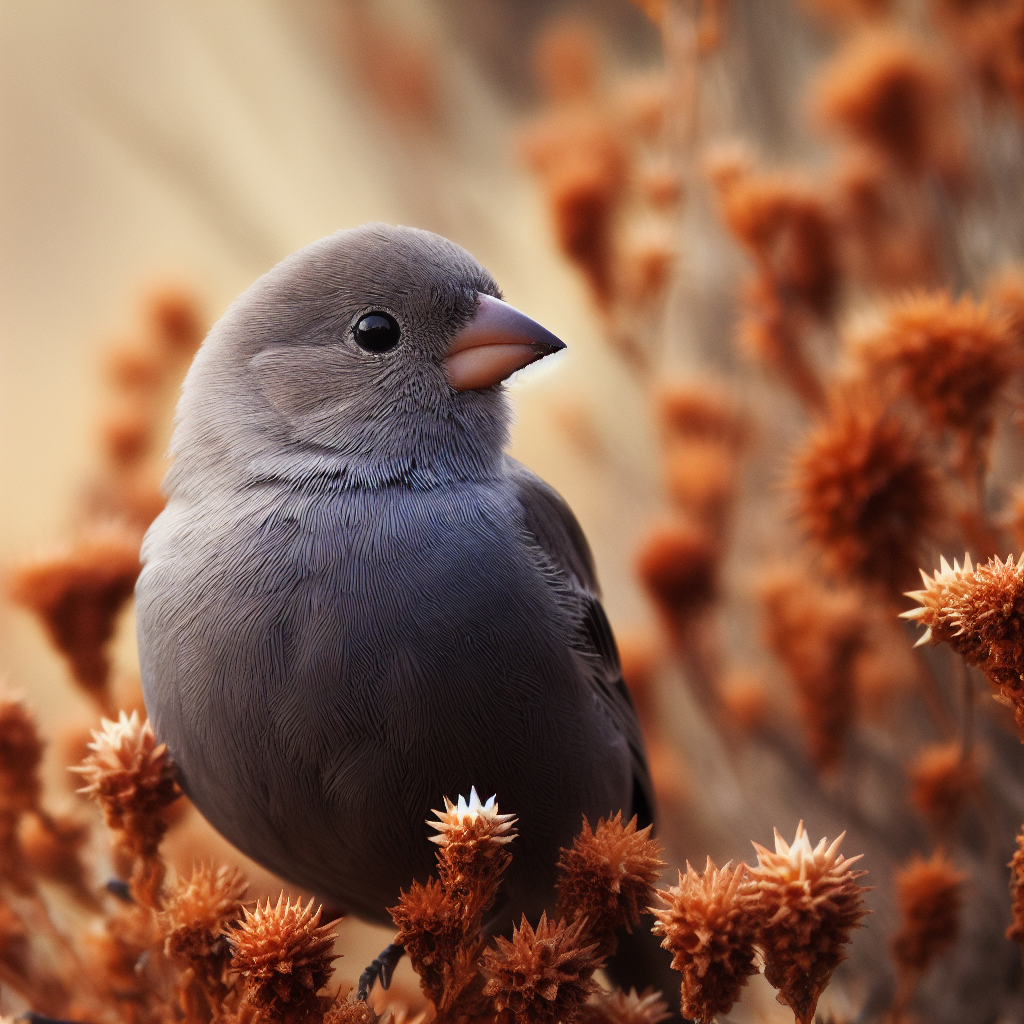
Just picture it: a bird that looks like a whisper of twilight given wings, a soft, smoky gray mingling with touches of delicate pink on the males, as if the dawn itself had brushed its rosy fingers across their feathers. And those eyes! They're like tiny, obsidian beads, sharp and intelligent, missing absolutely nothing. It’s not just a bird; it's a living poem of resilience, a testament to thriving in the world's high places. You see, this little champion calls the soaring altitudes of the Andes home, and let me tell you, it navigates those dizzying heights with an ease that would make any seasoned mountaineer green with envy. Its song? It's not a grand opera, no, it's more like a cheerful, persistent whistle, a little melody that cuts through the thin mountain air, a true spirit song of the sierras. Every time I hear it, I swear, it feels like the mountains themselves are humming along!
Morphology and Adaptations: A Feathered Superhero of the Peaks!
Now, let's talk about its wardrobe, because the Plumbeous Sierra Finch truly knows how to dress for success! The males, oh, they're a sight to behold. Imagine a cloak of deep, soft, almost charcoal gray, like the shadows dancing across a granite peak at dusk. But then, surprise! A blush of rosy pink appears on their underparts and rump, a delicate flush that contrasts beautifully with the somber tones. It’s as if they decided, "You know what? I'm going to add a dash of joy to this rugged landscape!" The females, while still lovely, are a bit more understated, a uniform duller gray-brown, a camouflage masterclass that blends them seamlessly into the rocky outcrops they call home. And let me tell you, this isn’t just about looking good; it’s a matter of life and survival! The males’ soft pink might attract the ladies (and who can blame them?), but the overall muted tones for both sexes are pure genius for blending in with the lichen-covered rocks and sparse vegetation of their high-altitude haunts, making them practically invisible to keen-eyed predators. It’s like they have their own built-in invisibility cloaks, straight out of a fantasy novel!
And size-wise, they’re perfectly petite, averaging around 14-15 cm (about 5.5-6 inches) in length, with a wingspan that’s probably around 22-25 cm (8.5-10 inches). As for weight, we're talking about a mere 20-25 grams — lighter than a few quarters in your pocket! But don’t let that dainty stature fool you. These are not fragile flowers! Their compact size and relatively short, rounded wings are absolute powerhouses, allowing them to zip through the turbulent mountain winds with astonishing agility, much like a tiny, feathered fighter jet. Their beaks? Ah, a true marvel of engineering! It’s short, conical, and perfectly adapted for crushing seeds, their primary food source. Think of it as a miniature, organic nutcracker, a tool of precision designed for extracting every last bit of goodness from even the toughest little seeds. Their legs and feet are robust, with strong claws, giving them a firm grip on the often-slippery, uneven terrain. They don't just perch; they anchor themselves, defying gravity with every confident hop. Honestly, describing their adaptations makes me feel like I'm talking about a tiny, super-powered alpinist, perfectly equipped for every challenge the mountains throw its way!
Ecology and Range: Home is Where the Peaks Are!
So, where do these magnificent little birds hang their hats? The Plumbeous Sierra Finch is a true child of the Andes, primarily found in the high-altitude grasslands and rocky slopes of western South America. We’re talking about regions in Peru, Bolivia, Chile, and Argentina, often at elevations that would leave most of us gasping for air — typically from 3,000 to over 5,000 meters (that's roughly 9,800 to over 16,400 feet!). They thrive in the harsh, windswept Puna and Altiplano zones, where the air is thin, the temperatures can swing wildly, and the vegetation is sparse and hardy. They are absolute masters of this unforgiving environment, finding their ecological niche among the tough grasses, low shrubs, and rocky outcrops.
They’re not typically found in dense forests or bustling urban centers (though, who knows, maybe one day we'll see a Plumbeous Sierra Finch ordering a latte in a mountain town café — a bird can dream!). No, their preference for these open, high-altitude environments means they’re perfectly adapted to a life where solitude and wide-open spaces are the norm. This also means they interact with a unique cast of characters: other hardy mountain species, from vicuñas to viscachas, and a host of specialized high-altitude plants. It's a closed ecosystem, a private club where only the toughest and most adaptable get a membership. And isn't that just the most captivating thing? To think of a tiny bird carving out a vibrant existence in such a demanding landscape, finding beauty and sustenance where others would see only desolation. It's truly inspiring, a testament to nature's boundless capacity for life!
Behavior and Ethology: A Symphony of Mountain Life
Now for the juicy bits, the inner workings of this little avian marvel! What’s on the Plumbeous Sierra Finch's menu? Mostly seeds, my friends! They are primarily granivores, using those superb little conical beaks to crack open the tough casings of various grass and plant seeds found in their high-altitude habitat. But they're not above supplementing their diet with a few insects, especially during the breeding season when extra protein is a must for growing chicks. It’s a classic case of fitting perfectly into the food web, converting the energy of the resilient mountain flora into vibrant, feathered life.
And their voice? As I mentioned, it’s not a showstopper, but it's utterly charming. Their calls are often described as sharp, clear whistles, sometimes given in a series. It’s not complex, but it’s effective, a distinct signature call that carries surprisingly well across the vast mountain expanses. Imagine standing on a silent, windswept ridge, and then — wheeeet! — a little burst of sound that reminds you that life, vibrant and persistent, thrives even here. What does it mean? A warning? A territorial claim? A gentle invitation to a mate? Perhaps it’s all of those and more, a language of the peaks that we’re only just beginning to decipher. Don’t you ever wonder what secrets those simple whistles hold?
When it comes to building a home, the Plumbeous Sierra Finch gets down to business. They typically build cup-shaped nests on the ground, often tucked away in a shallow depression, well-hidden among clumps of grass or under a protective rock. They use grasses, fine stems, and other soft plant materials, creating a snug little haven for their precious cargo. The female usually lays a clutch of 3 to 4 eggs, which are a lovely pale blue or greenish-blue, often speckled with darker markings. Incubation duties fall primarily to the female, and it's a period of quiet dedication, ensuring the warmth and safety of her future brood. The chicks are altricial, meaning they hatch helpless and naked, completely dependent on their parents for food and warmth. Both parents participate in feeding the voracious little fluffballs, bringing them insects and regurgitated seeds until they fledge and are ready to face the world. It’s a remarkable journey, from tiny, fragile egg to independent flyer, a testament to the power of parental devotion in the harsh mountain environment.
Are they travelers? Not typically! The Plumbeous Sierra Finch is mostly a resident species throughout its range. While some populations might move to slightly lower elevations during the harshest winter months to find food, they generally stay put, demonstrating incredible resilience to the extreme conditions. They’re homebodies, loyal to their mountain peaks, braving the elements with stoic grace. And their social life? During the breeding season, they're often found in pairs, fiercely territorial as they raise their young. But outside of breeding, it’s not uncommon to see them forming small, loose flocks, foraging together across the windswept slopes. There’s something so endearing about seeing a little cluster of these birds, hopping and pecking amongst the rocks, a tiny community thriving against the grand backdrop of the Andes.
Unique Biological Facts and Features: The Little Engine That Could!
Here's a fact that always blows my mind about these high-altitude residents: their blood composition is remarkably adapted to the low-oxygen environment! They have a higher concentration of hemoglobin and larger red blood cells compared to lowland birds, allowing them to efficiently extract and transport oxygen even from the thin mountain air. It's like they have their own natural turbochargers, perfectly engineered for life at the roof of the world. Imagine being able to run a marathon at 15,000 feet without skipping a beat! That’s the Plumbeous Sierra Finch for you. One time, I was watching a small flock foraging near a glacier, and I swear, one of them looked right at me, then hopped onto a rock and stretched its tiny wings as if to say, "Pretty impressive, right?" It was just a fleeting moment, but it felt like a shared secret, a nod to their extraordinary survival skills.
As for human interaction, the Plumbeous Sierra Finch generally keeps to its remote, high-altitude domains, largely undisturbed by human presence. However, like all species, they are indirectly impacted by climate change and habitat degradation. Mining activities, unchecked tourism, and the effects of a warming planet on their delicate ecosystem are concerns. But here's the thing, and this is where my optimism just soars: these birds are indicators. Their continued presence, their vibrant little lives, remind us that the natural world, even in its most extreme forms, is incredibly resilient. And by protecting their mountain homes, we're not just safeguarding the finches; we're protecting entire ecosystems, vast reservoirs of biodiversity and beauty that benefit us all!
Conservation Status and Protection: A Beacon of Hope!
Good news, my friends! The Plumbeous Sierra Finch is currently listed as 'Least Concern' by the IUCN Red List, which means its populations are stable and widespread, a true testament to its adaptability and the relative remoteness of its habitat. Isn't that just a wonderful thought? To know that this tenacious little bird is thriving, flying freely across its Andean strongholds! This doesn't mean we can become complacent, of course. Continuous monitoring and habitat protection efforts are crucial. Organizations working in the Andes focus on preserving pristine mountain ecosystems, controlling grazing, and promoting sustainable tourism practices. Every park, every protected area in the Andes, plays a vital role in ensuring that the Plumbeous Sierra Finch, along with countless other unique species, continues to sing its song and inspire us with its sheer tenacity. It reminds me that every small action, every decision we make to respect and protect our natural world, sends ripples of positive change far beyond what we can imagine. We are all guardians of this incredible planet, and seeing a species like the Plumbeous Sierra Finch thriving is a powerful affirmation that our efforts truly matter.
So, the next time you gaze at a distant mountain peak, or perhaps even just feel a brisk breeze on your face, take a moment to think of the Plumbeous Sierra Finch. This isn't just a bird; it's a whispered secret of the Andes, a living embodiment of resilience, a tiny, vibrant pulse in the vast heart of the mountains. It's a reminder that even in the harshest environments, life finds a way to flourish, to sing, to dazzle us with its quiet strength. And maybe, just maybe, if you listen closely enough, you'll hear that cheerful little whistle carrying on the wind, a gentle invitation to marvel at the boundless wonders that flutter, hop, and soar all around us. What a world, eh? What a truly, unbelievably vibrant world!