Most beautiful small birds - Sykalo Eugen 2024
Yellow Wagtail (Motacilla flava)
Identification:
- Species name: Yellow Wagtail
- Scientific name: Motacilla flava
- Family: Motacillidae (Wagtails)
- Order: Passeriformes (Songbirds)
- Subclass: Neornithes (Modern birds)
- Class: Aves (Birds)
Oh, hello there, fellow adventurer! You know, I've always felt a bit like a bird at heart — soaring on dreams, flitting through ideas — which is why their stories just grab me! And let me tell you, there’s a little feathered marvel that absolutely sparkles in my mind, a creature that embodies pure, unadulterated joy with every flutter: the Yellow Wagtail, Motacilla flava!
A Tiny Sunbeam on Legs: The Yellow Wagtail!
Imagine this: you're walking through a sun-drenched meadow, maybe a whisper of a breeze ruffling the tall grasses, and suddenly, a flash of pure, vibrant yellow darts across your path! It’s not a buttercup taking flight, though it’s just as delightful. No, it’s the utterly enchanting Yellow Wagtail, a tiny avian superstar whose very presence seems to paint the world in brighter hues. This isn’t just a bird; it’s a living, breathing exclamation mark of cheerfulness! Its tail, oh, its tail! It wags with an almost comical, yet utterly endearing, enthusiasm, like a tiny conductor leading an invisible orchestra of sunshine. It's a signature move, a little dance that sets it apart, a perpetual motion machine of happiness. And that song? A bright, bubbly cascade of notes, a melody that feels like the very essence of a perfect summer's day. It’s an effervescent invitation, a secret whispered from the heart of the meadow: "Come, be delighted!"
Nature's Gold Standard: The Yellow Wagtail's Dazzling Design
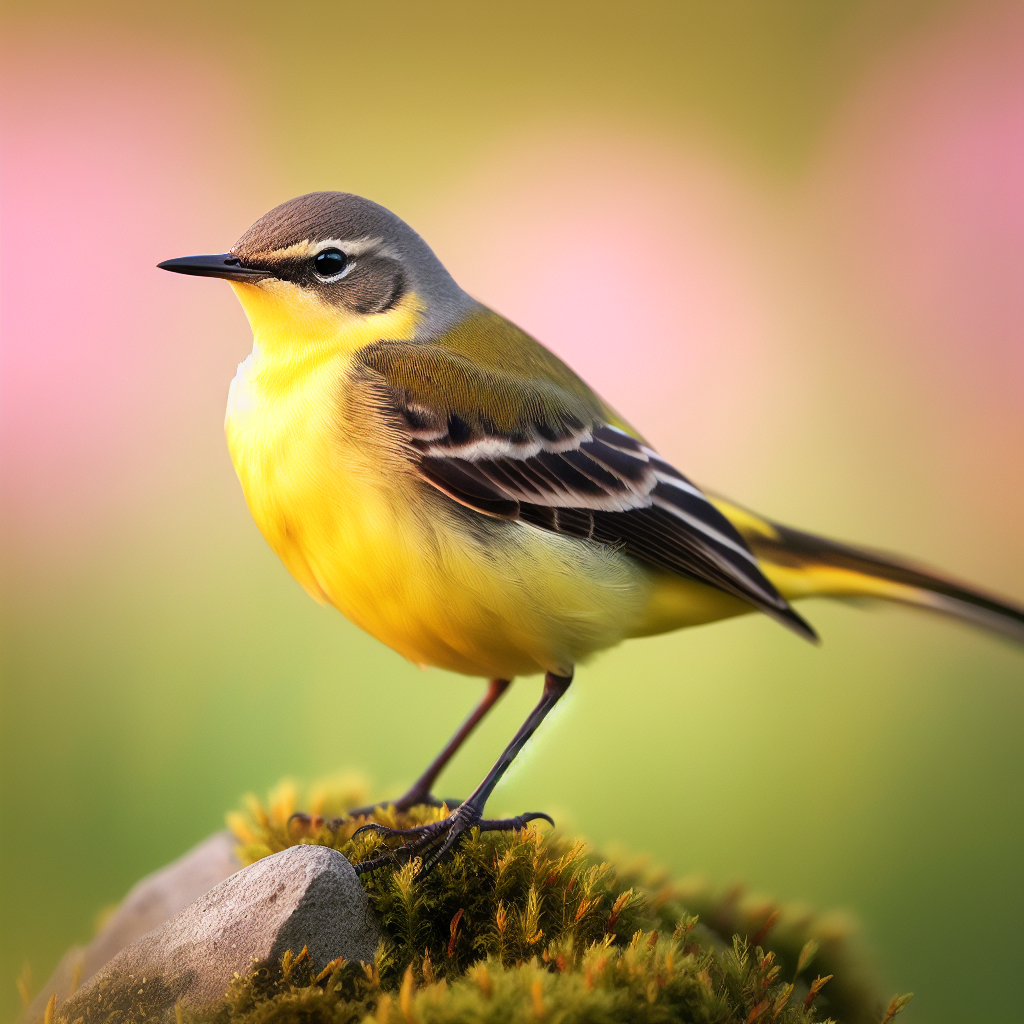
Alright, let's get down to the nitty-gritty, the biological marvels that make this little dynamo tick! When you first clap eyes on a Yellow Wagtail, especially a male in breeding plumage, it’s as if the rainbow itself decided to sprout wings and embody the color yellow! We’re talking about a vivid, almost electric lemon-yellow on its underparts, contrasting beautifully with olive-green or grey-green on its back and head, depending on the subspecies — and there are so many glorious variations! Each one a subtle masterpiece of natural selection, like a collection of limited-edition jewels. The females? A tad more subdued, perhaps a softer, more muted yellow, a delicate pastel dream compared to the male’s flamboyant declaration. But no less beautiful, mind you! This coloration isn't just for show, oh no. It's a vibrant billboard for potential mates, a declaration of health and vitality, a subtle nod to camouflage against sun-dappled grasses for those quick dashes after insects.
And its dimensions! It’s not a titan of the skies, but a compact powerhouse. We're talking an average body length of about 15-16 cm, with a wingspan that barely kisses 23-27 cm. Its weight? A mere 17-20 grams, lighter than a handful of dandelion fluff! But don't let these delicate measurements fool you. This is a finely tuned aerial acrobat! Its sleek, pointed wings are built for swift, agile flight, perfectly suited for darting mid-air to snatch an unsuspecting fly. Its legs are slender, yet strong, allowing it to navigate the uneven terrain of fields and marsh edges with surprising grace, a tiny ballerina on spindly stilts. And that beak! A perfectly proportioned, delicate forceps, ideally shaped for plucking tiny insects from leaves or snatching them on the wing. It’s like a superhero of nature, armed with precision tools and a bright, bold cape! My grandma always used to say, "Even the smallest things have the biggest stories," and boy, was she right about this one!
Wanderlust and Wet Meadows: The Yellow Wagtail's Global Stage
So, where does our little sunshine bird call home? The Yellow Wagtail is a true citizen of the world, with a particular fondness for open, damp habitats. Think lush, wet meadows, the edges of freshwater marshes, agricultural fields (especially those with a healthy invertebrate population!), and even sometimes damp pastures. They are the quintessential inhabitants of the "in-between" places, where water meets land, creating a rich tapestry of life. They're not forest dwellers, nor do they seek the dizzying heights of mountains. No, they crave the sprawling, sun-kissed plains where they can flit and forage to their heart's content.
And their geographic range? Oh, it’s vast and wonderfully varied! You can find these charming birds flitting across much of Europe, Asia, and even parts of Africa. From the cool plains of Scandinavia to the sun-baked wetlands of the Mediterranean, and stretching all the way across Russia and into parts of East Asia, they're truly global travelers. Their distribution is a testament to their incredible adaptability, a triumph of tiny wings spreading joy across continents. They thrive where insect life is abundant, where the soil is moist and fertile, and where there's enough open space for their signature tail-wagging dance. It’s a captivating testament to the wonders of nature's design, how a species can carve out its perfect niche in such diverse landscapes, adapting its diet and behavior to whatever feast the local environment offers.
The Foraging Fandango and the Sweetest Serenade: Wagtail Ways
Now, let's talk about dinner and a show! The Yellow Wagtail is a true insectivore, a nimble hunter of the miniature world. They’re masters of the quick dash and the aerial swoop, primarily feeding on small insects and their larvae, like flies, beetles, ants, and even tiny caterpillars. They'll often run along the ground, wagging that tail, flushing out hidden prey, or make quick aerial forays to snatch insects in flight. It's a delightful spectacle to watch, a tiny, vibrant torpedo of efficiency! And how does this fit into the food web? They're crucial insect controllers, helping to keep various invertebrate populations in check, a tiny but mighty cog in the intricate machinery of the ecosystem.
And their voice! Oh, their vocalizations are pure avian poetry. Their typical call is a sharp, bright, and slightly metallic "tse-lip!" or "tswee-ee!". It’s a cheerful greeting, a warning, a constant chatter that seems to convey an unending supply of good spirits. The song, particularly during breeding season, is a more elaborate, yet still simple, series of trills and whistles, a lively, almost jazz-like solo played on the morning dew. Does it have lyrics? I like to imagine it does, a tiny opera of territorial declarations and heartfelt invitations to potential mates. Maybe it’s a question only the wind can answer, or perhaps it's simply a joyous expression of being alive! Whoa, did you know that some bird songs are so complex they could practically be considered sonnets? Our little wagtail keeps it sweet and to the point, a true minimalist maestro!
When it comes to reproduction, these little romantics are diligent architects. The nest, often a neat, cup-shaped structure, is usually built on the ground, tucked away amongst dense vegetation or in a shallow depression. They use fine grasses, moss, and rootlets, lining it with softer materials like hair or feathers. It’s a cozy, camouflaged nursery, a testament to their desire to give their young the best possible start. The female typically lays 5-6 eggs, pale white to creamy with speckles, and both parents share incubation duties for about 11-13 days. And then, the chicks! Tiny, hungry bundles of fluff that demand constant attention. Both parents are tirelessly devoted, bringing back beak-loads of insects to nourish their rapidly growing offspring. The young fledge after about 12-13 days, ready to take their first tentative flights into the big, bright world. Their survival rates depend heavily on weather and predator presence, but these little ones are born with an innate drive to thrive!
And migration? Oh, it’s an exhilarating tale of a grand adventure! Most Yellow Wagtails are migratory, undertaking incredible journeys between their breeding grounds in Europe and Asia and their wintering grounds in sub-Saharan Africa and South Asia. Imagine! These tiny birds, often less than 20 grams, embarking on thousands of kilometers of flight, navigating by instinct, powered by stored fat, facing countless challenges along the way. It's a testament to their remarkable endurance, their fierce will to survive and reproduce. It’s not just a fact; it’s a saga of epic proportions, a true triumph of nature! And their social structure? While they can be seen in loose flocks outside the breeding season, particularly during migration, during breeding, they are typically monogamous pairs, fiercely territorial, defending their chosen patch of meadow with spirited calls and energetic chases.
The Wagtail's Whimsy: Tales from the Meadow
Let me tell you one of the most astounding biological facts about this bird: while their tail-wagging might seem like a mere nervous tic, it's actually believed to serve multiple functions! Some scientists think it helps flush out insects from vegetation, making them easier to spot and catch. Others propose it might be a visual signal to other wagtails, perhaps indicating alertness or territoriality. It's like their own little, secret communication system, a rhythmic code only they fully understand! One time, I was watching a Yellow Wagtail flitting through a field, and I swear, it winked at me when it caught that beetle! Perhaps it was just the sun, but in that moment, it felt like a secret shared, a silent acknowledgment of nature’s endless wonders.
And their interaction with humans? While not a synanthropic species (meaning they don't typically live in close association with humans like pigeons or sparrows), their fate is often intertwined with ours. Agricultural practices, particularly intense pesticide use, can drastically reduce the insect populations they rely on, posing a significant threat. But when sustainable farming practices are employed, where biodiversity is valued, these little birds can absolutely flourish, becoming a vibrant indicator of a healthy ecosystem. They are nature's tiny barometer of environmental well-being, reminding us that every creature, no matter how small, plays a vital role.
A Future as Bright as Their Feathers: Conservation Hopes
So, what about their conservation status? Happily, for now, the Yellow Wagtail is generally listed as "Least Concern" on the IUCN Red List. This is wonderful news! However, certain subspecies or local populations can face pressures due to habitat loss, agricultural intensification, and climate change. Their role in the ecosystem as insect predators is invaluable, contributing to the delicate balance of food webs.
What measures are in place? Many wetland areas are protected, and there's a growing awareness of the importance of maintaining diverse agricultural landscapes that support insect life. Successful examples of species preservation often involve restoring or creating new wetland habitats, promoting wildlife-friendly farming practices, and educating communities about the importance of biodiversity. We can all help, you know! Even small actions like supporting sustainable agriculture, reducing pesticide use in our own gardens, or advocating for the protection of wetlands can make a world of difference. It's not just about protecting a species; it's about protecting the vibrancy and joy they bring to our world. Let's not let the music fade, shall we?
A Golden Glow, A Promise of Joy
And so, as the sun dips below the horizon, casting long, golden shadows across the meadow, imagine our little Yellow Wagtail, perched on a fence post, its tail still twitching with that inimitable enthusiasm. It’s not just a bird; it’s a living testament to resilience, adaptability, and the sheer, unadulterated beauty of the natural world. Its very existence is a joyful whisper, a reminder that even in the smallest corners of our planet, incredible stories are unfolding. It’s a promise, really, that as long as there are sun-drenched meadows and buzzing insects, there will be a little golden bird, dancing its happy dance, wagging its tail, and reminding us all to find the vibrant joy in every single day. Go on, step outside, breathe deep, and who knows? Maybe you’ll catch a glimpse of your own little sunbeam on legs!