5 Steps to a 5: AP Calculus AB 2017 (2016)
STEP 4
Review the Knowledge You Need to Score High
CHAPTER 11
Big Idea 3: Integrals and the Fundamental Theorems of Calculus
Integration
IN THIS CHAPTER
Summary: On the AP Calculus AB exam, you will be asked to evaluate integrals of various functions. In this chapter, you will learn several methods of evaluating integrals including U-Substitution. Also, you will be given a list of common integration and differentiation formulas, and a comprehensive set of practice problems. It is important that you work out these problems and check your solutions with the given explanations.

Key Ideas
 Evaluating Integrals of Algebraic Functions
Integration Formulas
U-Substitution Method Involving Algebraic Functions
U-Substitution Method Involving Trigonometric Functions
U-Substitution Method Involving Inverse Trigonometric Functions
U-Substitution Method Involving Logarithmic and Exponential Functions
11.1 Evaluating Basic Integrals
Main Concepts: Antiderivatives and Integration Formulas, Evaluating Integrals

• Answer all parts of a question from Section II even if you think your answer to an earlier part of the question might not be correct. Also, if you do not know the answer to part one of a question, and you need it to answer part two, just make it up and continue.
Antiderivatives and Integration Formulas
Definition: A function F is an antiderivative of another function f if F ′ (x ) = f (x ) for all x in some open interval. Any two antiderivatives of f differ by an additive constant C . We denote the set of antiderivatives of f by 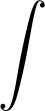 f (x )dx , called the indefinite integral of f .
Integration Rules:
1. 
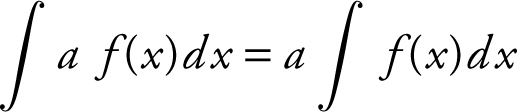
2. 
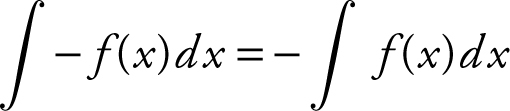
3. 
4. 
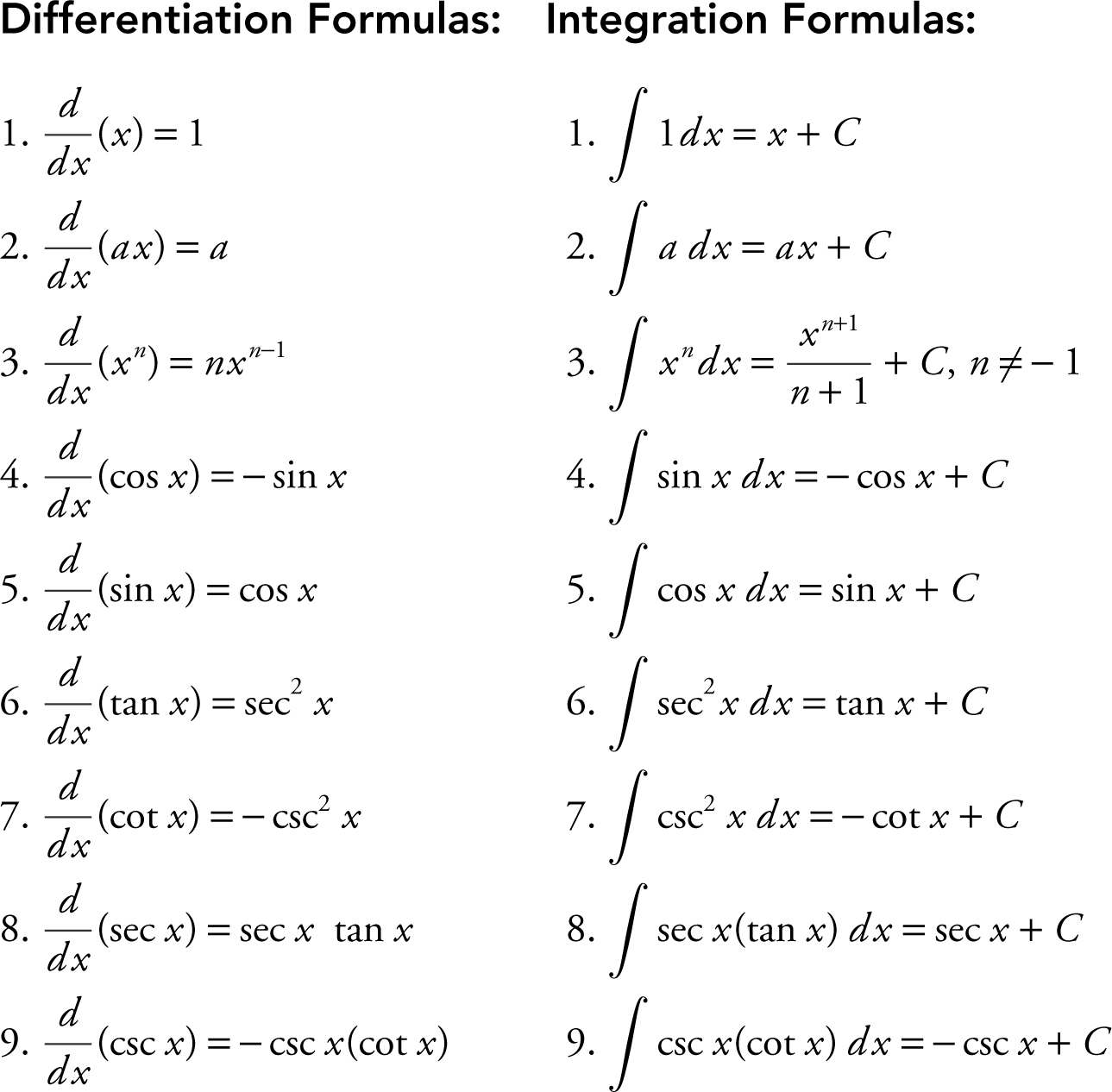
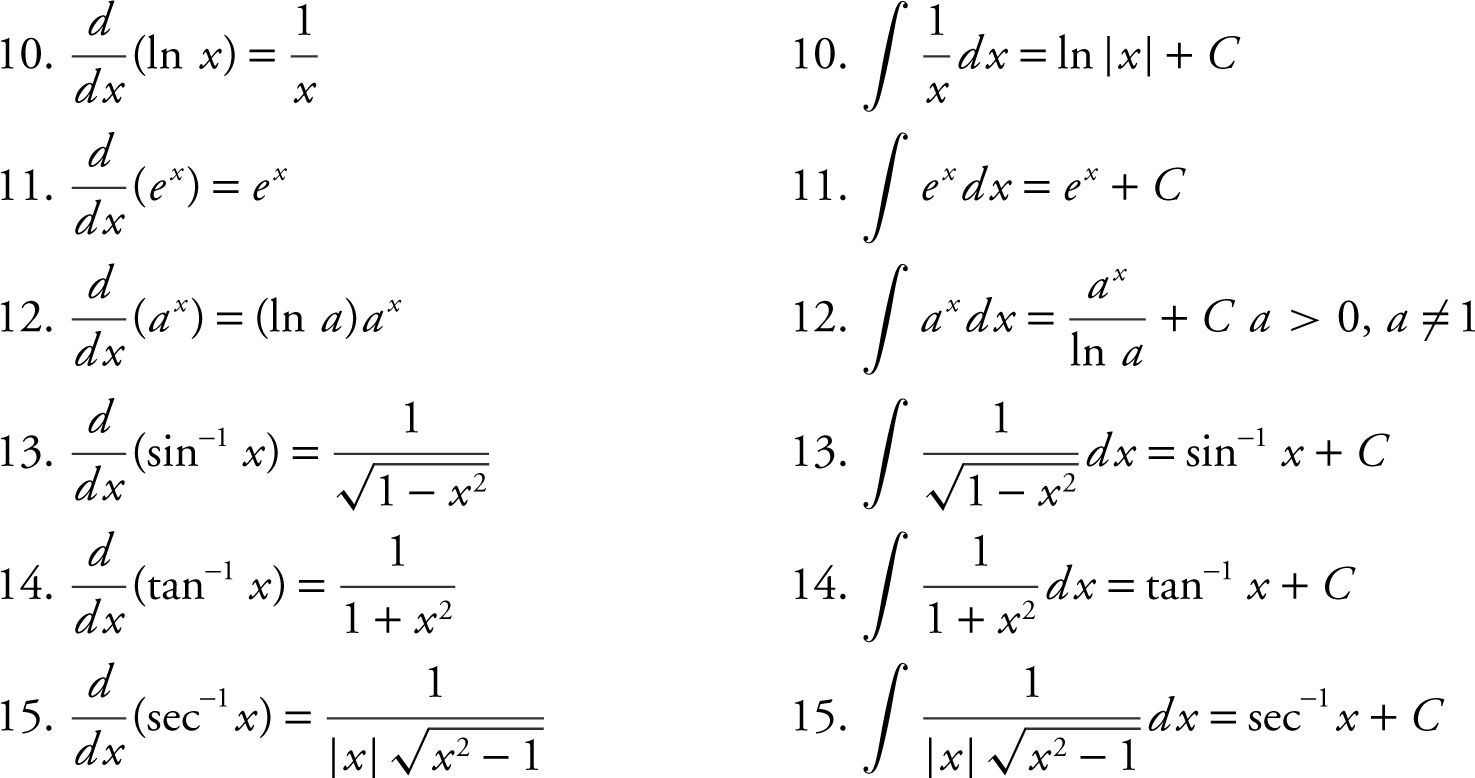
More Integration Formulas:
16. 
17. 
18. 
19. 
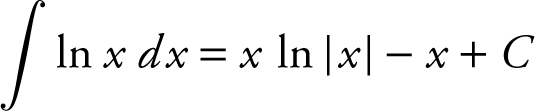
20. 
21. 
22. 
23. 
24. 
Note: After evaluating an integral, always check the result by taking the derivative of the answer (i.e., taking the derivative of the antiderivative).
• Remember that the volume of a right-circular cone is 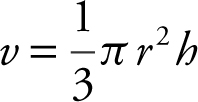 where r is the radius of the base and h is the height of the cone.
Evaluating Integrals
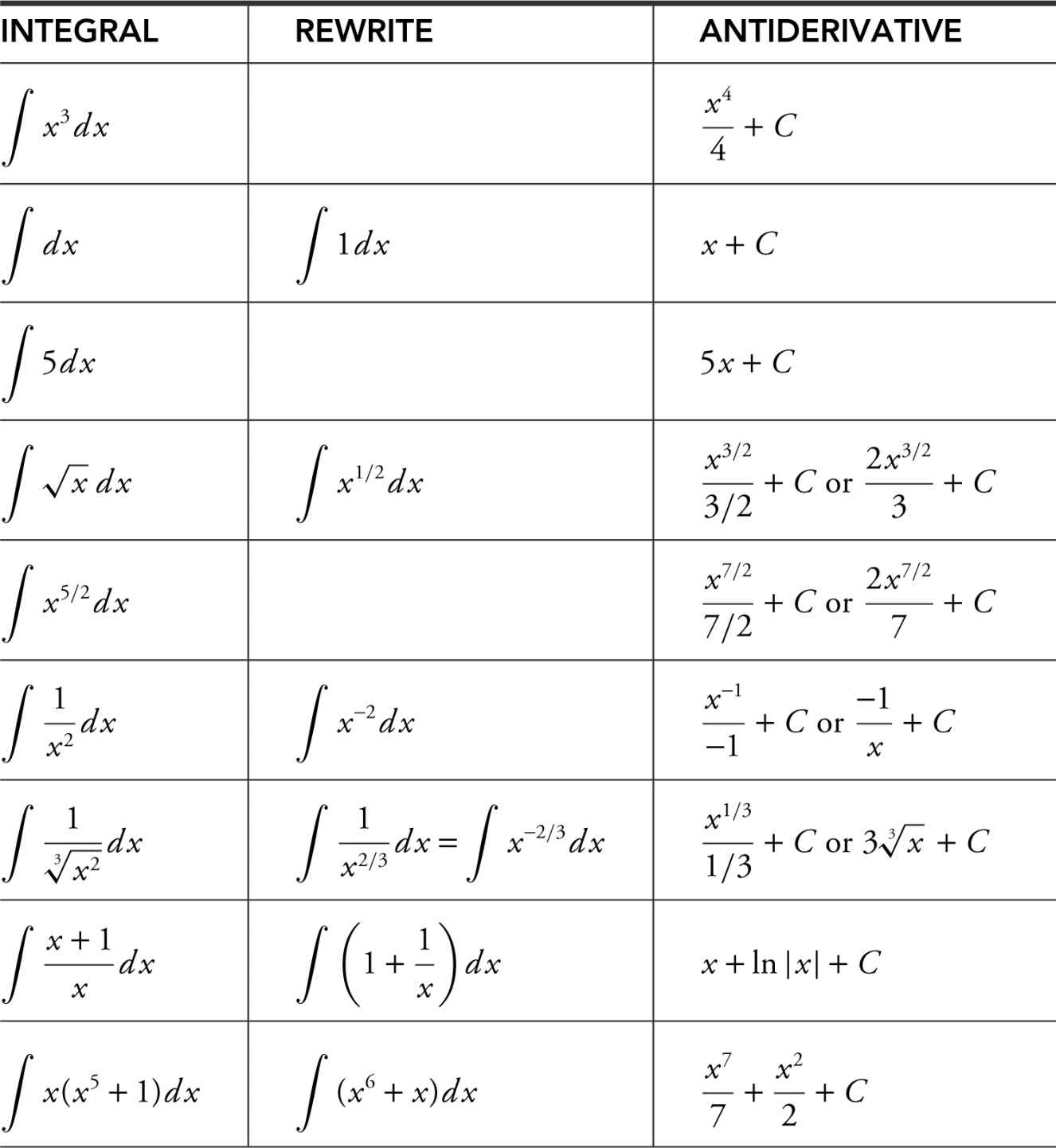
Example 1
Evaluate 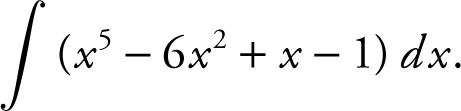
Applying the formula 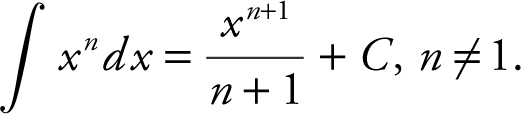

Example 2
Evaluate 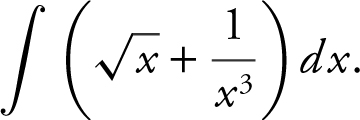
Rewrite 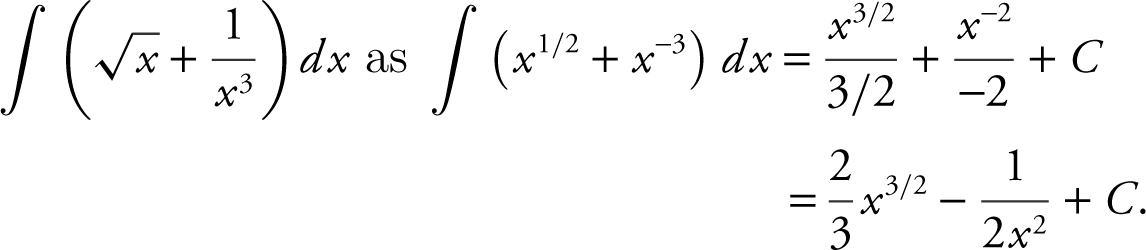
Example 3
If 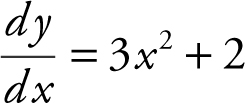 , and the point (0, –1) lies on the graph of y , find y .
Since 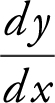 , then y is an antiderivative of . Thus,
 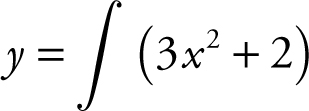 dx = x 3 + 2x + C. The point (0, – 1) is on the graph of y .
Thus, y = x 3 + 2x + C becomes –1 = 03 + 2(0) + C or C = –1. Therefore, y = x 3 + 2x – 1.
Example 4
Evaluate 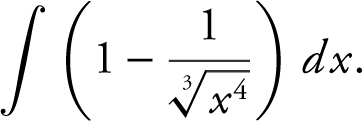
Rewrite as 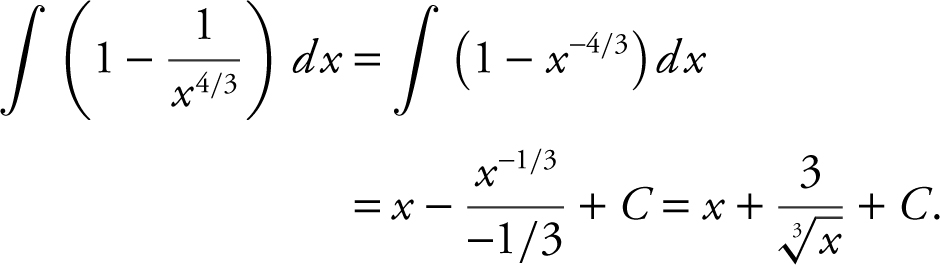
Example 5
Evaluate 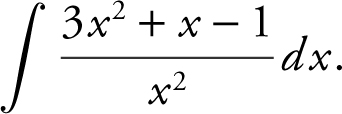
Rewrite as 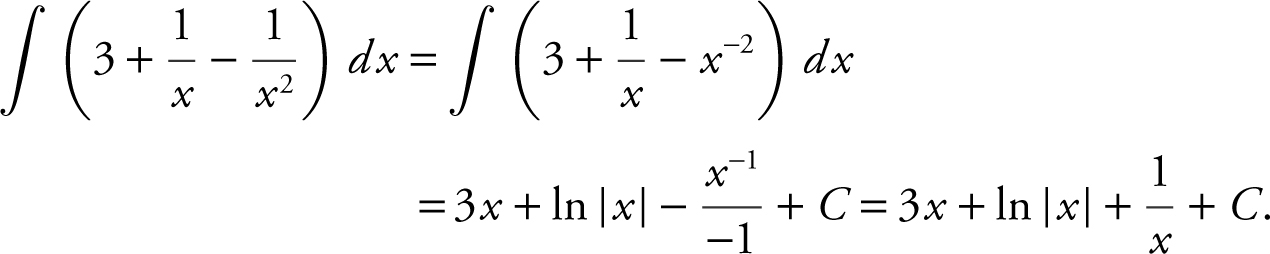
Example 6
Evaluate 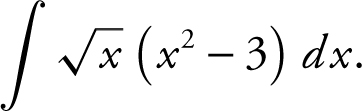
Rewrite: 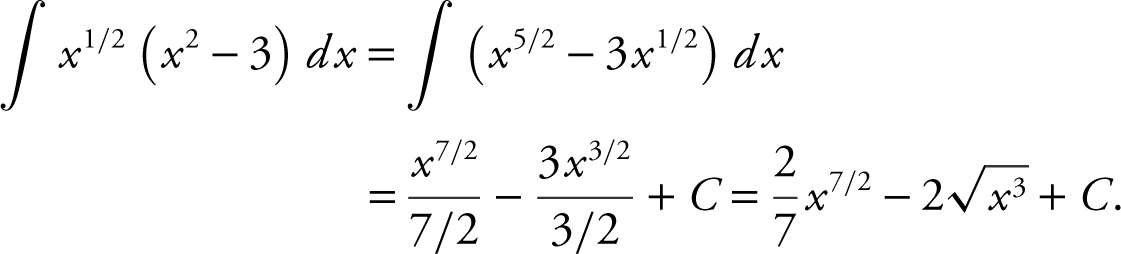
Example 7
Evaluate 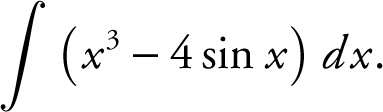

Example 8
Evaluate 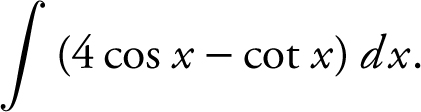

Example 9
Evaluate 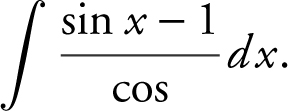
Rewrite: 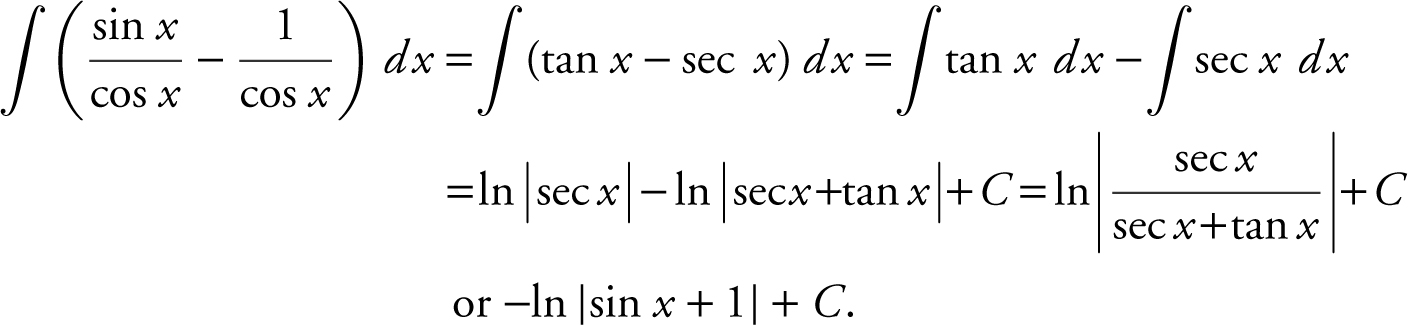
Example 10
Evaluate 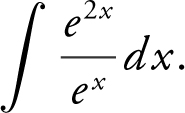
Rewrite the integral as 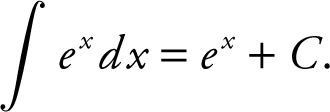
Example 11
Evaluate 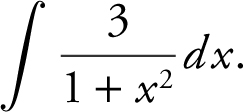
Rewrite as 3 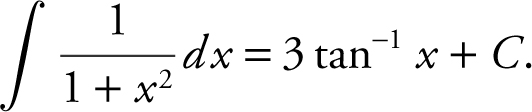
Example 12
Evaluate 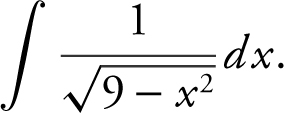
Rewrite as 
Example 13
Evaluate 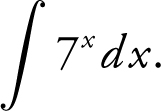
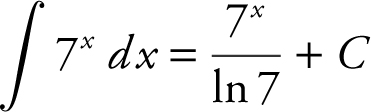
Reminder: You can always check the result by taking the derivative of the answer.
• Be familiar with the instructions for the different parts of the exam before the day of the exam. Review the instructions in the practice tests provided at the end of this book.
11.2 Integration by U-Substitution
Main Concepts: The U-Substitution Method, U-Substitution and Algebraic Functions, U-Substitution and Trigonometric Functions, U-Substitution and Inverse Trigonometric Functions, U-Substitution and Logarithmic and Exponential Functions
The U-Substitution Method
The Chain Rule for Differentiation

The Integral of a Composite Function
If f (g (x )) and f ′ are continuous and F ′ = f , then

Making a U-Substitution
Let u = g (x ), then du = g ′(x )dx


Procedure for Making a U-Substitution
Steps:
1. Given f (g (x )); let u = g (x ).
2. Differentiate: du = g ′(x )dx .
3. Rewrite the integral in terms of u .
4. Evaluate the integral.
5. Replace u by g (x ).
6. Check your result by taking the derivative of the answer.
U-Substitution and Algebraic Functions
Another Form of the Integral of a Composite Function
If f is a differentiable function, then

Making a U-Substitution
Let u = f (x ); then du = f ′(x )dx .

Example 1
Evaluate 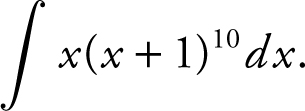
Step 1: Let u = x + 1; then x = u – 1.
Step 2: Differentiate: du = dx .
Step 3: Rewrite: 
Step 4: Integrate: 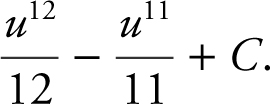
Step 5: Replace 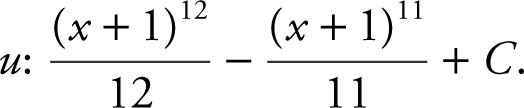
Step 6: Differentiate and Check: 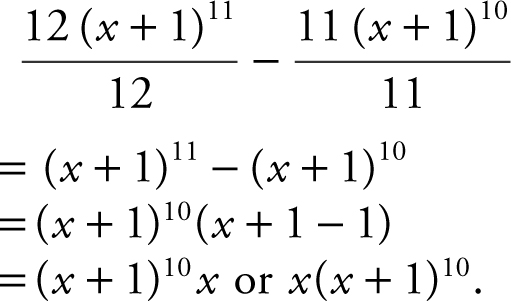
Example 2
Evaluate 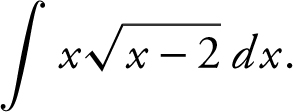
Step 1: Let u = x – 2; then x = u + 2.
Step 2: Differentiate: du = dx .
Step 3: Rewrite: 
Step 4: Integrate: 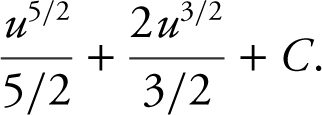
Step 5: Replace: 
Step 6: Differentiate and Check: 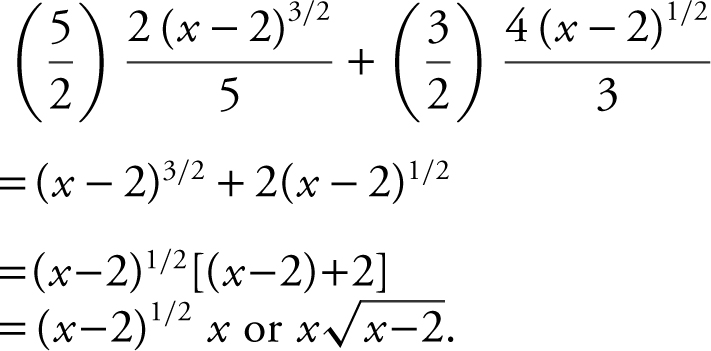
Example 3
Evaluate 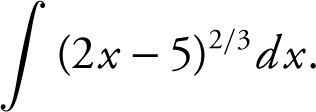
Step 1: Let u = 2x – 5.
Step 2: Differentiate: 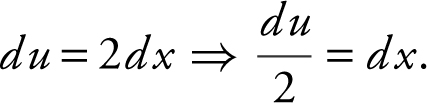
Step 3: Rewrite: 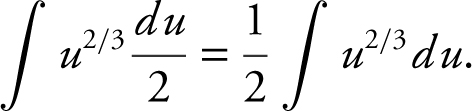
Step 4: Integrate: 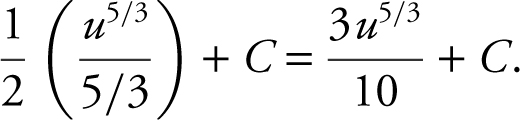
Step 5: Replace: 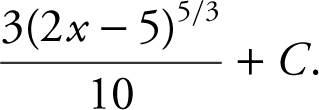
Step 6: Differentiate and Check: 
Example 4
Evaluate 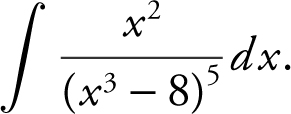
Step 1: Let u = x 3 – 8.
Step 2: Differentiate: 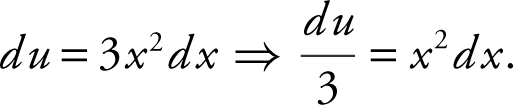
Step 3: Rewrite: 
Step 4: Integrate: 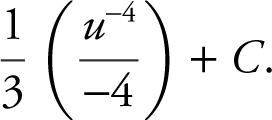
Step 5: Replace: 
Step 6: Differentiate and Check: 
U-Substitution and Trigonometric Functions
Example 1
Evaluate 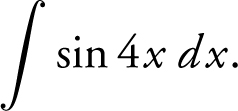
Step 1: Let u = 4x .
Step 2: Differentiate: 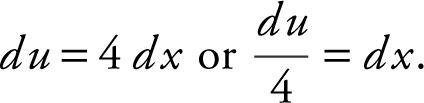
Step 3: Rewrite: 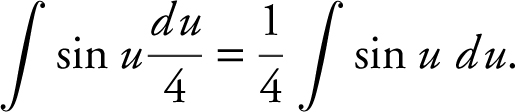
Step 4: Integrate: 
Step 5: Replace: 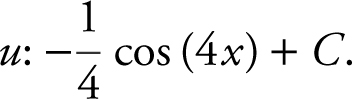
Step 6: Differentiate and Check: 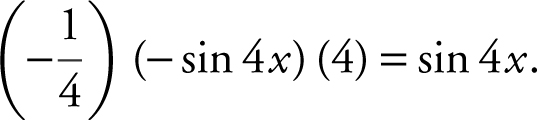
Example 2
Evaluate 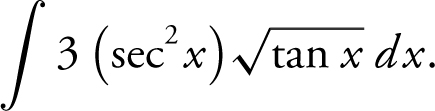
Step 1: Let u = tan x .
Step 2: Differentiate: du = sec2 x dx .
Step 3: Rewrite: 
Step 4: Integrate: 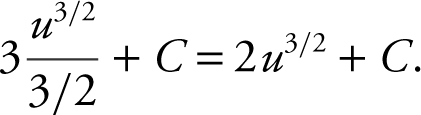
Step 5: Replace u : 2(tan x )3 /2 + C or 2 tan3 /2 x + C .
Step 6: Differentiate and Check: 
Example 3
Evaluate 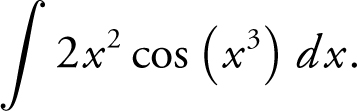
Step 1: Let u = x 3 .
Step 2: Differentiate: 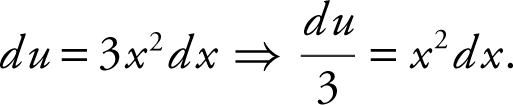
Step 3: Rewrite: 
Step 4: Integrate: 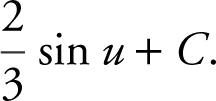
Step 5: Replace: 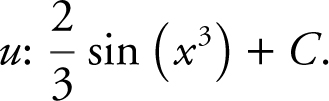
Step 6: Differentiate and Check: 
• Remember that the area of a semi-circle is  . Do not forget the
  . If the cross sections of a solid are semi-circles, the integral for the volume of the solid will involve
 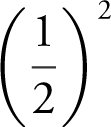 which is
  .
.
U-Substitution and Inverse Trigonometric Functions
Example 1
Evaluate 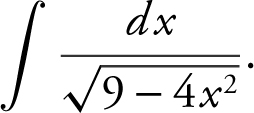
Step 1: Let u = 2x .
Step 2: Differentiate: 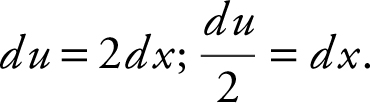
Step 3: Rewrite: 
Step 4: Integrate: 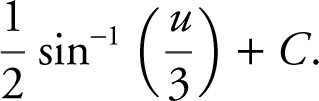
Step 5: Replace: 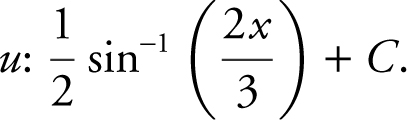
Step 6: Differentiate and Check: 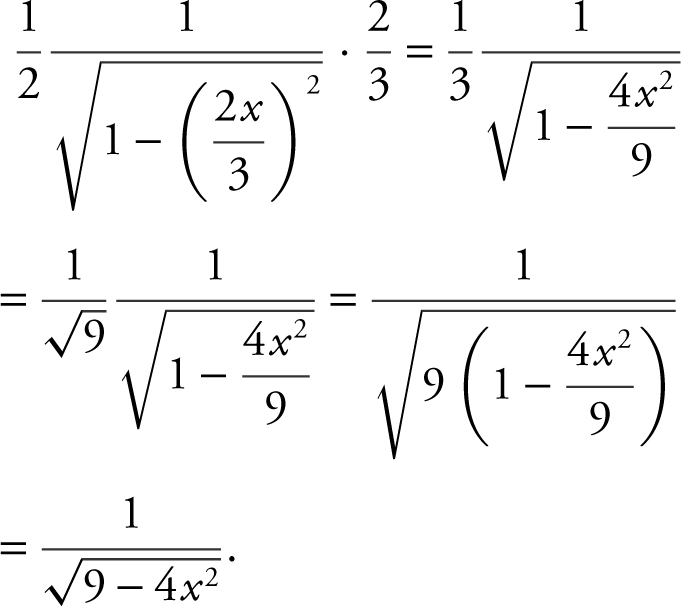
Example 2
Evaluate 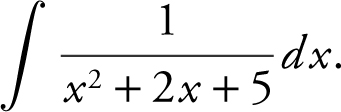
Step 1: Rewrite: 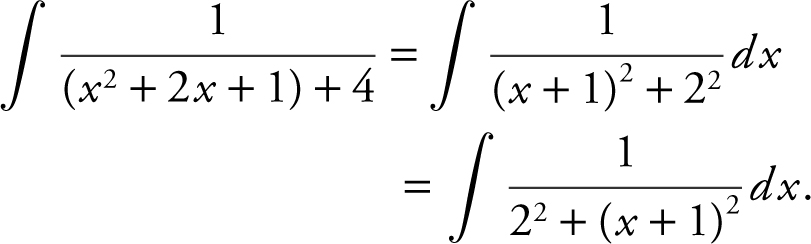
Let u = x + 1.
Step 2: Differentiate: du = dx .
Step 3: Rewrite: 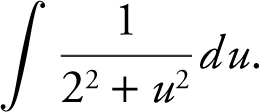
Step 4: Integrate: 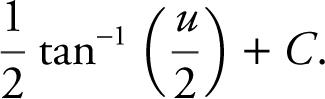
Step 5: Replace: 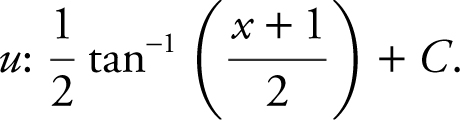
Step 6: Differentiate and Check: 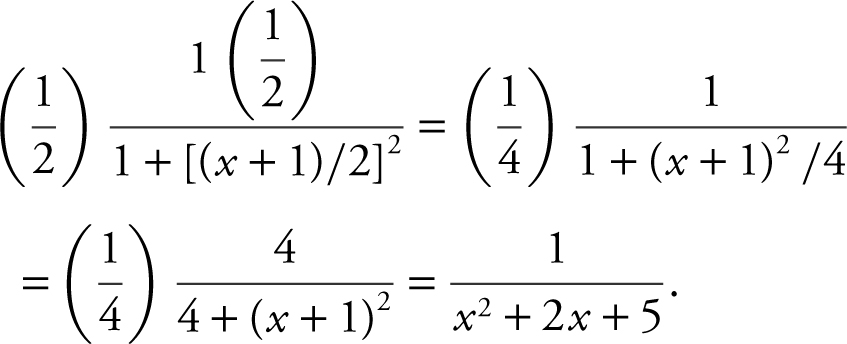
• If the problem gives you that the diameter of a sphere is 6 and you are using formulas such as 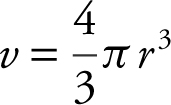 or s = 4πr 2 , do not forget that r = 3.
U-Substitution and Logarithmic and Exponential Functions
Example 1
Evaluate 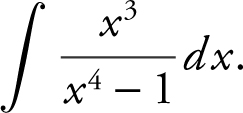
Step 1: Let u = x 4 – 1.
Step 2: Differentiate: 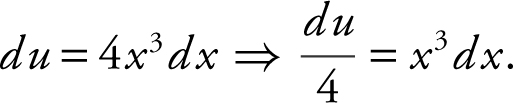
Step 3: Rewrite: 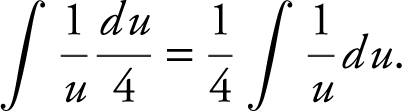
Step 4: Integrate: 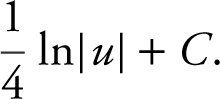
Step 5: Replace: 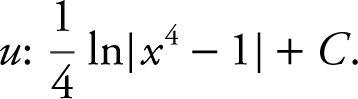
Step 6: Differentiate and Check: 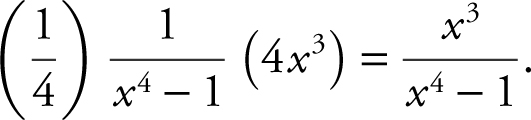
Example 2
Evaluate 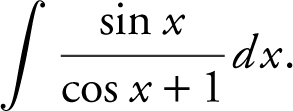
Step 1: Let u = cos x + 1.
Step 2: Differentiate: du = – sin xdx ⇒ –du = sin xdx .
Step 3: Rewrite: 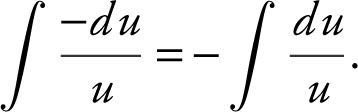
Step 4: Integrate: –ln |u | + C .
Step 5: Replace u : –ln |cos x + 1| + C .
Step 6: Differentiate and Check: 
Example 3
Evaluate 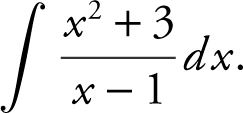
Step 1: Rewrite 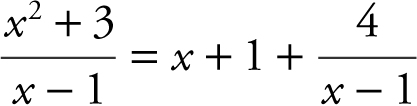 ; by dividing (x 2 + 3) by (x – 1).

Let u = x – 1.
Step 2: Differentiate: du = dx .
Step 3: Rewrite: 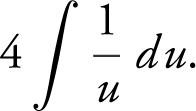 .
.
Step 4: Integrate: 4 ln|u | + C .
Step 5: Replace u : 4 ln|x – 1| + C .

Step 6: Differentiate and Check:
Example 4
Evaluate 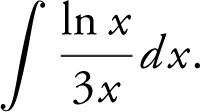
Step 1: Let u = ln x .
Step 2: Differentiate: 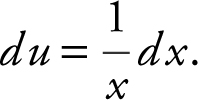
Step 3: Rewrite: 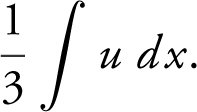
Step 4: Integrate: 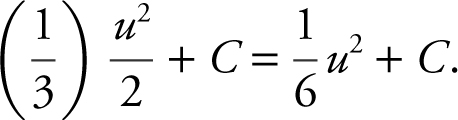
Step 5: Replace 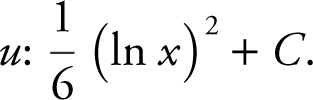
Step 6: Differentiate and Check: 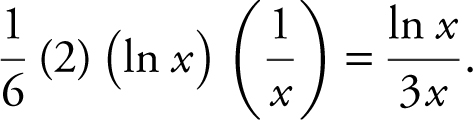
Example 5
Evaluate 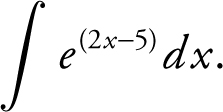
Step 1: Let u = 2x – 5.
Step 2: Differentiate: 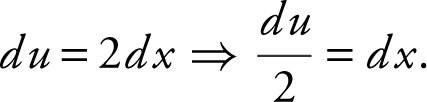
Step 3: Rewrite: 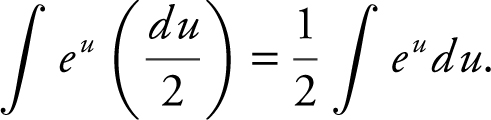
Step 4: Integrate: 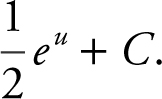
Step 5: Replace 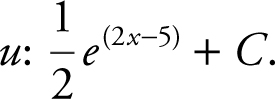
Step 6: Differentiate and Check: 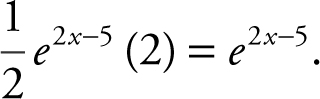
Example 6
Evaluate 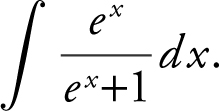
Step 1: Let u = ex + 1.
Step 2: Differentiate: du = ex dx .
Step 3: Rewrite: 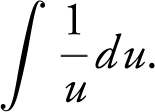
Step 4: Integrate: ln |u | + C .
Step 5: Replace u : ln |ex + 1| + C .
Step 6: Differentiate and Check: 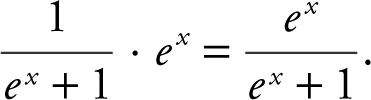
Example 7
Evaluate 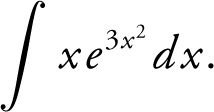
Step 1: Let u = 3x 2 .
Step 2: Differentiate: 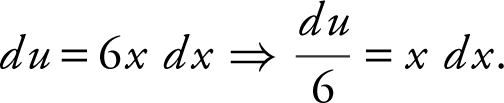
Step 3: Rewrite: 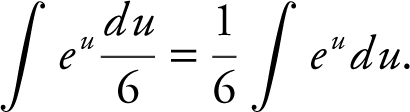
Step 4: Integrate: 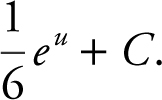
Step 5: Replace: 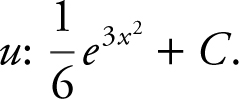
Step 6: Differentiate and Check: 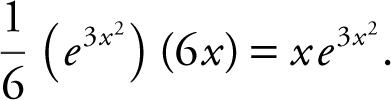
Example 8
Evaluate 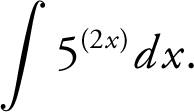
Step 1: Let u = 2x .
Step 2: Differentiate: 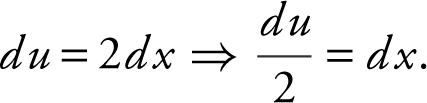
Step 3: Rewrite: 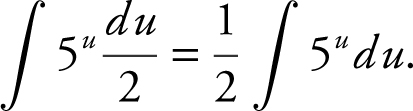
Step 4: Integrate: 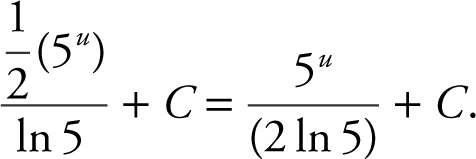
Step 5: Replace: 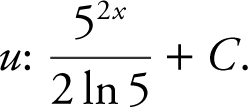
Step 6: Differentiate and Check: 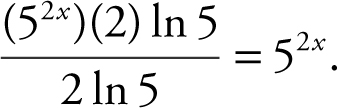
Example 9
Evaluate 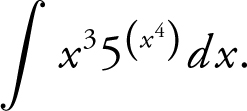
Step 1: Let u = x 4 .
Step 2: Differentiate: 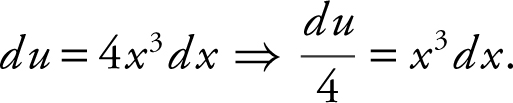
Step 3: Rewrite: 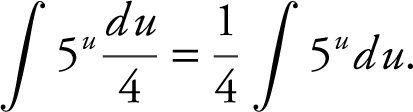
Step 4: Integrate: 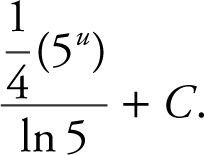
Step 5: Replace: 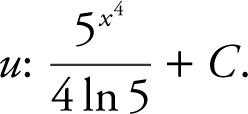
Step 6: Differentiate and Check: 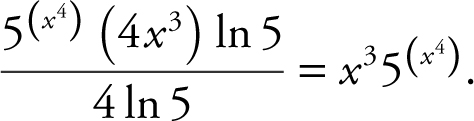
Example 10
Evaluate 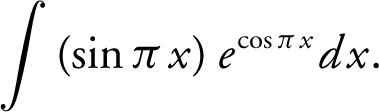
Step 1: Let u = cos π x .
Step 2: Differentiate: 
Step 3: Rewrite: 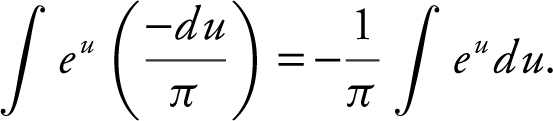
Step 4: Integrate: 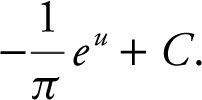
Step 5: Replace: 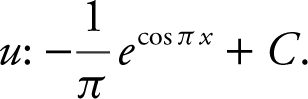
Step 6: Differentiate and Check: 
11.3 Rapid Review
1. Evaluate 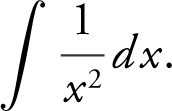
Answer: Rewrite as 
2. Evaluate 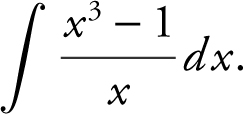
Answer: Rewrite as 
3. Evaluate 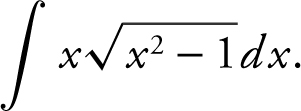
Answer: Rewrite as 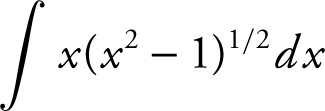 . Let u = x 2 – 1.
Thus, 
4. Evaluate 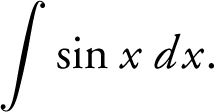
Answer: – cos x + C .
5. Evaluate 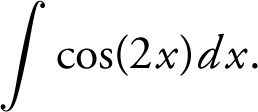
Answer: Let u = 2x and obtain 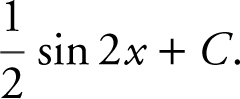
6. Evaluate 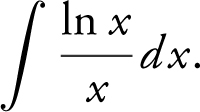
Answer: Let u = ln 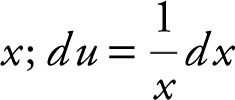 and obtain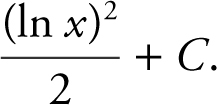
7. Evaluate 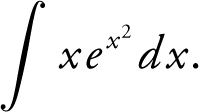
Answer: Let 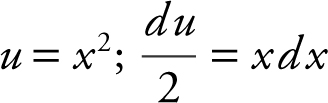 and obtain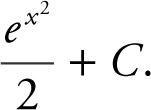
11.4 Practice Problems
Evaluate the following integrals in problems 1 to 20. No calculators are allowed. (However, you may use calculators to check your results.)
1 . 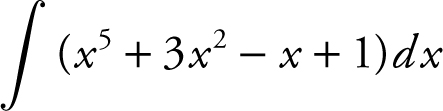
2 . 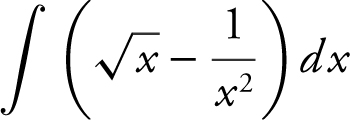
3 . 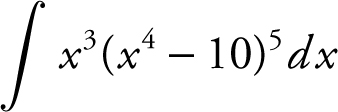
4 . 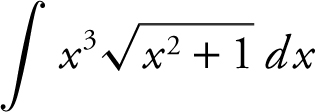
5 . 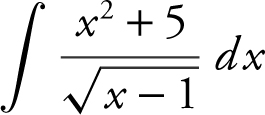
6 . 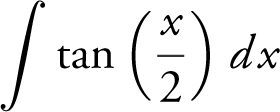
7 . 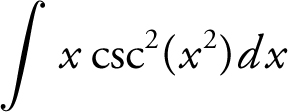
8 . 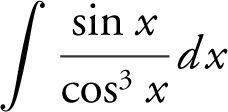
9 . 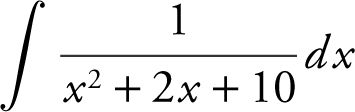
10 . 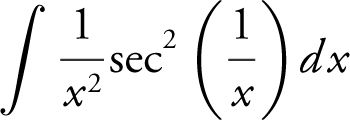
11 . 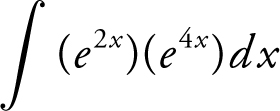
12 . 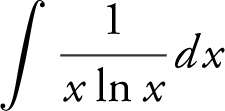
13 . 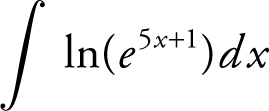
14 . 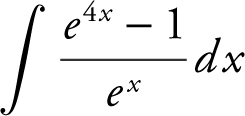
15 . 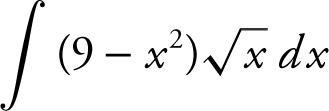
16 . 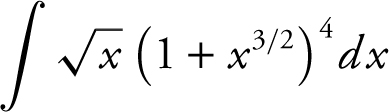
17 . If 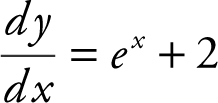 and the point (0, 6) is on the graph of y , find y .
18 . 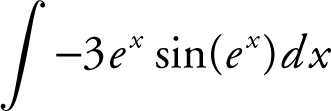
19 . 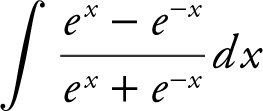
20 . If f (x ) is the antiderivative of 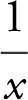 and f (1) = 5, find f (e ).
11.5 Cumulative Review Problems
(Calculator) indicates that calculators are permitted.
21 . The graph of the velocity function of a moving particle for 0 ≤ t ≤ 10 is shown in Figure 11.5-1 .
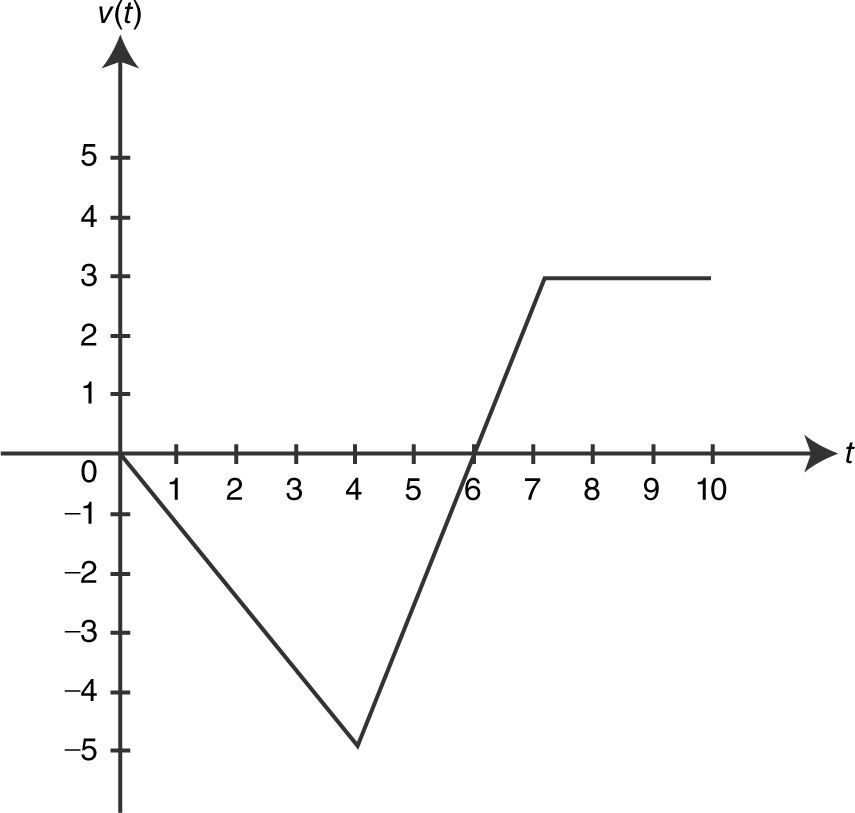
Figure 11.5-1
(a) At what value of t is the speed of the particle the greatest?
(b) At what time is the particle moving to the right?
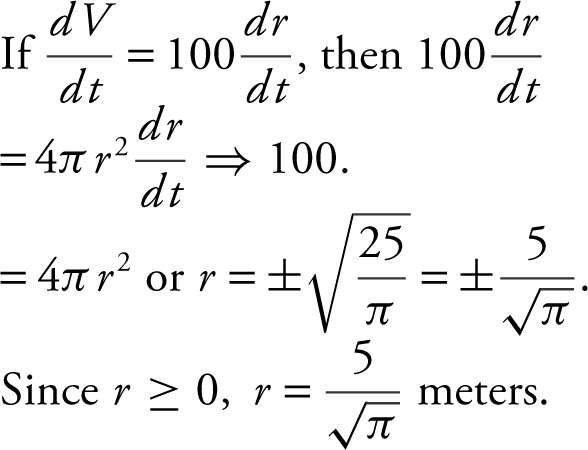
22 . Air is pumped into a spherical balloon, whose maximum radius is 10 meters. For what value of r is the rate of increase of the volume a hundred times that of the radius?
23 . Evaluate 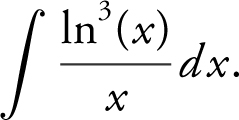
24 . (Calculator) The function f is continuous and differentiable on (0, 2) with f ″ (x ) > 0 for all x in the interval (0, 2).
Some of the points on the graph are shown below.
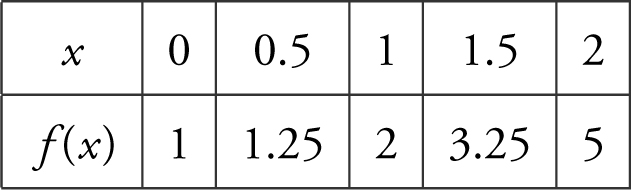
Which of the following is the best approximation for f ′ (1)?
(a) f ′ (1) < 2
(b) 0.5 < f ′ (1) < 1
(c) 1.5 < f ′ (1) < 2.5
(d) 2.5 < f ′ (1) < 3.5
(e) f ′ (1) > 2
25 . The graph of the function f ″ on the interval [1, 8] is shown in Figure 11.5-2 . At what value(s) of t on the open interval (1, 8), if any, does the graph of the function f ′ :
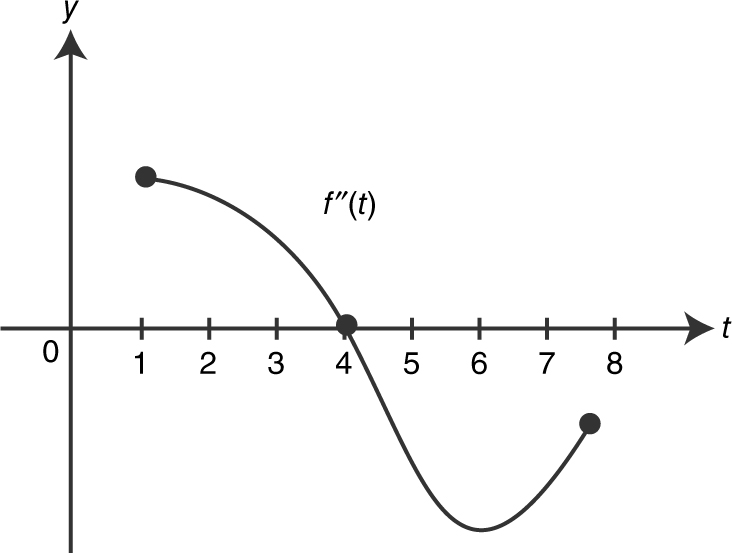
Figure 11.5-2
(a) have a point of inflection?
(b) have a relative maximum or minimum?
(c) become concave upward?
11.6 Solutions to Practice Problems
1 . 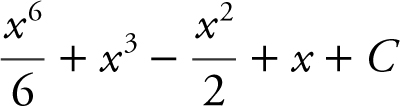
2 . Rewrite: 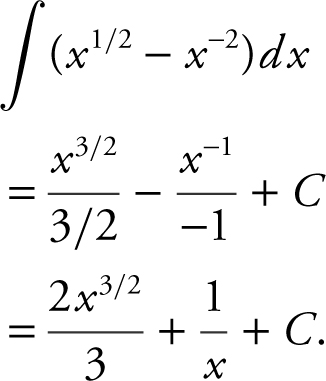
3 . Let u = x 4 – 10; du = 4x 3 dx or 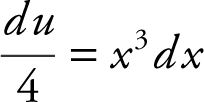 .
.
Rewrite: 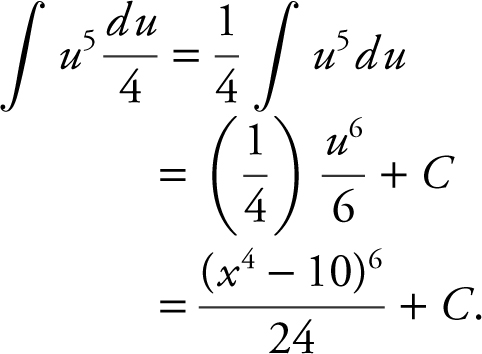
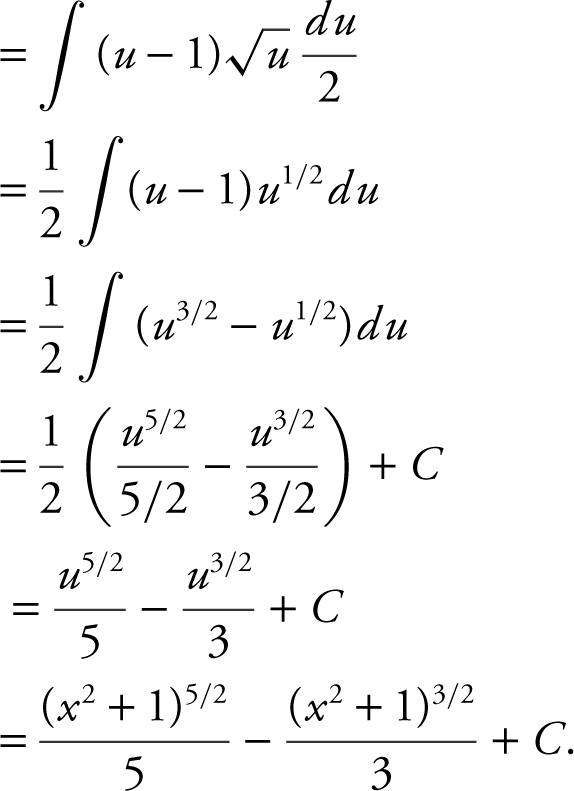
4 . Let u = x 2 + 1 ⇒ (u – 1) = x 2 and du = 2x dx or 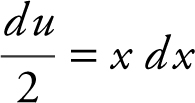 .
.
Rewrite: 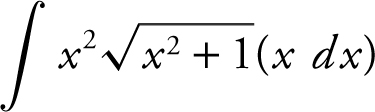
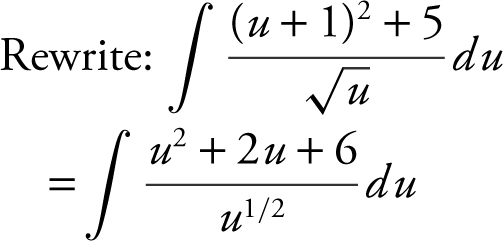
5 . Let u = x – 1; du = dx and (u + 1) = x .
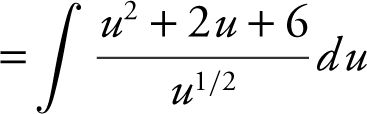
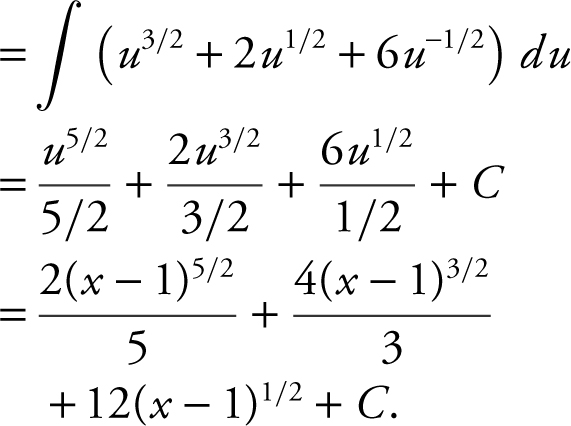
6 . Let 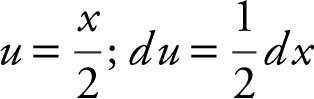 or 2du = dx .
Rewrite: 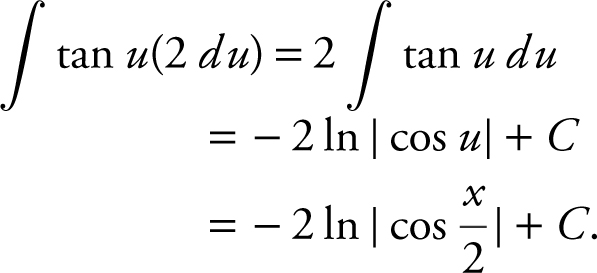
7 . Let u = x 2 ; du = 2x dx or 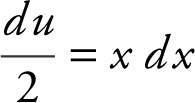 .
.
Rewrite: 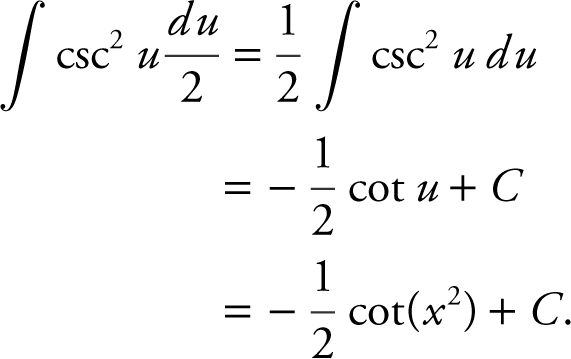
8 . Let u = cos x ; du = – sin x dx or –du = sin x dx .
Rewrite: 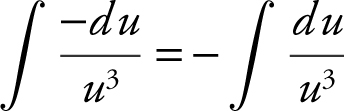
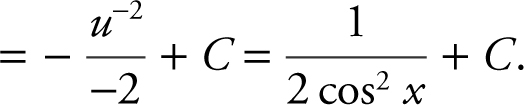
9 . Rewrite: 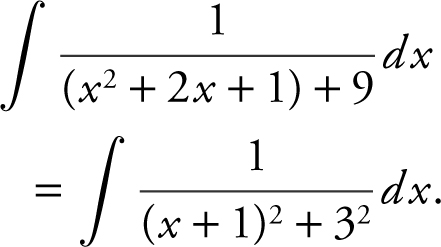
Let u = x + 1; du = dx .
Rewrite: 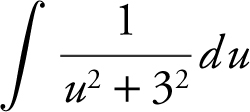
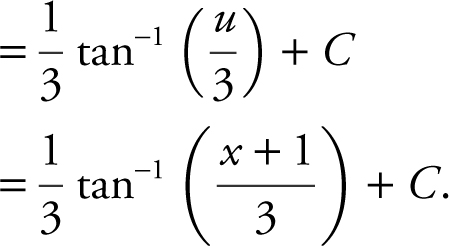
10 . Let 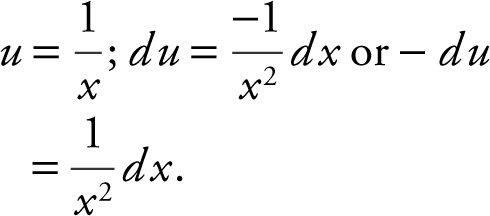
Rewrite: 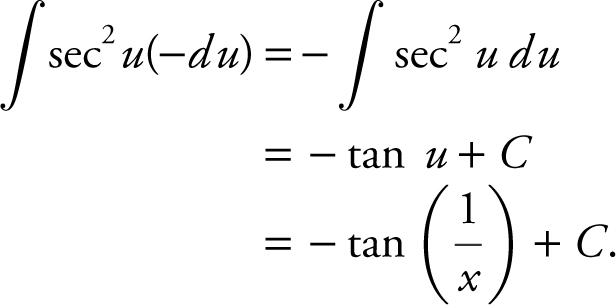
11 . Rewrite: 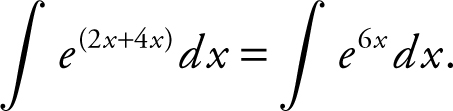
Let u = 6x ; du = 6 dx or 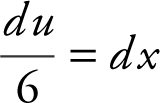 .
.
Rewrite: 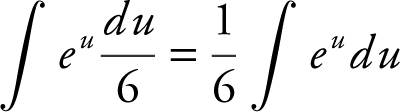
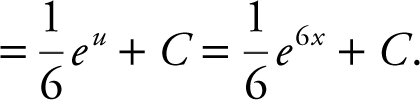
12 . Let u = ln x ; 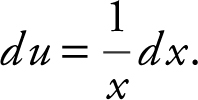
Rewrite: 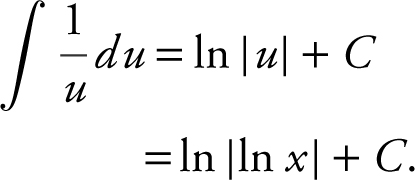
13 . Since ex and ln x are inverse functions:
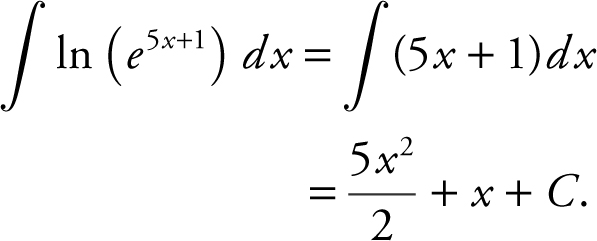
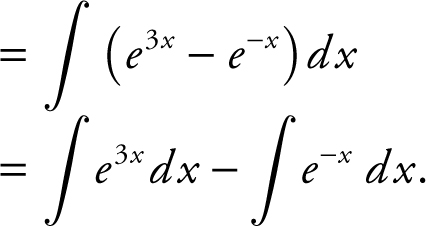
14 . Rewrite: 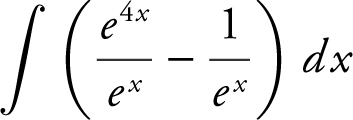
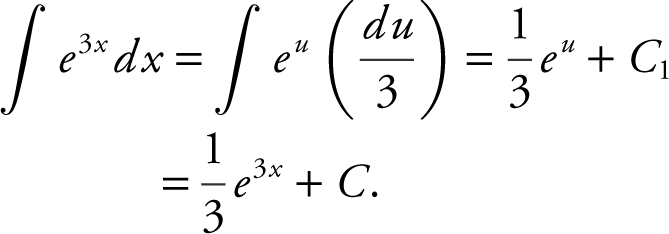
Let u = 3x ; du = 3dx ;
Let v = –x ; dv = – dx ;
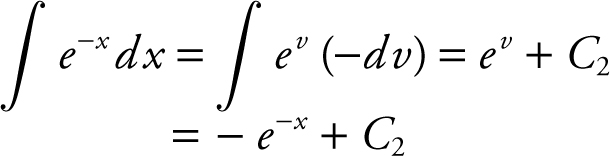
Thus, 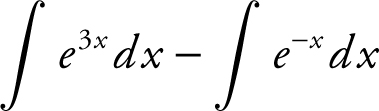
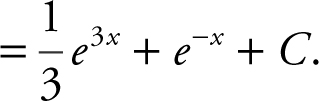
Note: C 1 and C 2 are arbitrary constants, and thus C 1 + C 2 = C .
15 . Rewrite:
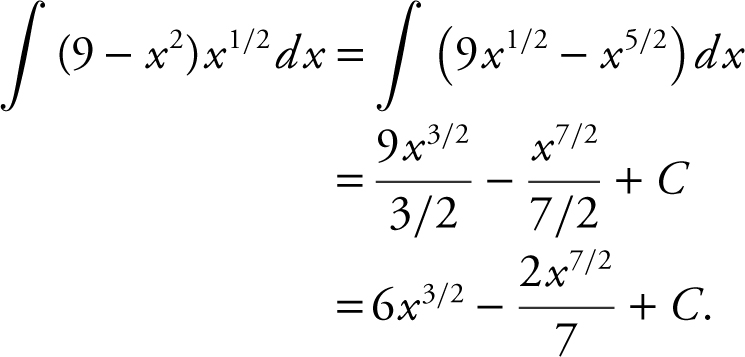
16 . Let 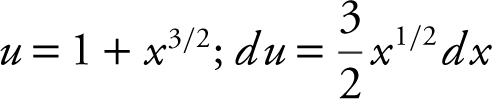 or
or
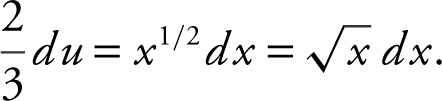
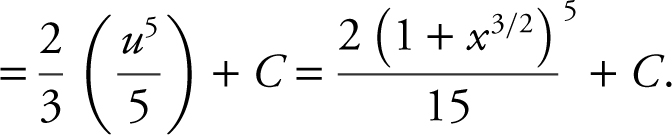
Rewrite: 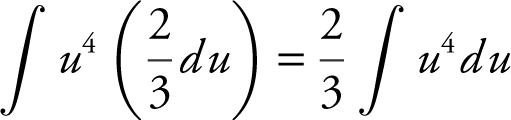
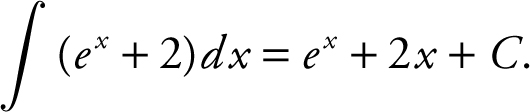
17 . Since 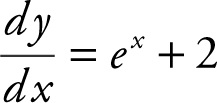 , then y =
The point (0, 6) is on the graph of y .
Thus, 6 = e 0 + 2(0) + C ⇒ 6 = 1 + C or C = 5. Therefore, y = e x + 2x + 5.
18 . Let u = ex ; du = ex dx .
Rewrite: 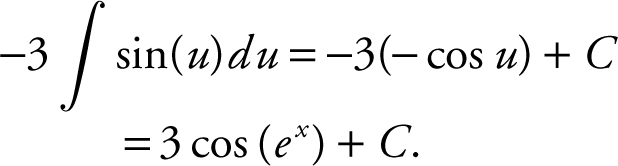
19 . Let u = ex + e– x ; du = (ex – e – x ) dx .
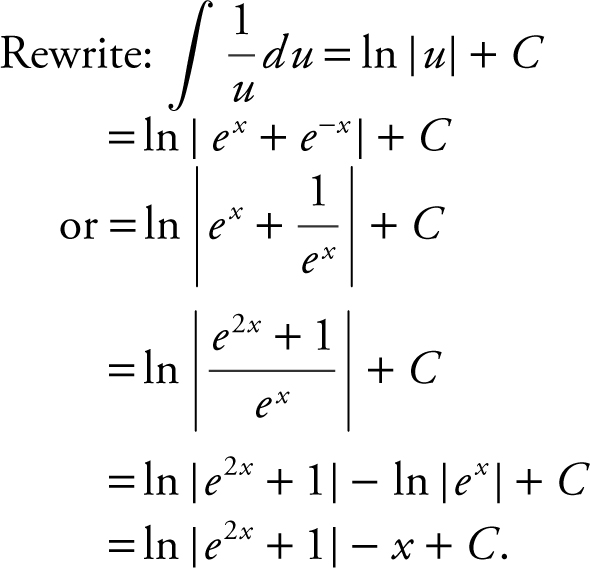
20 . Since f (x ) is the antiderivative of 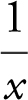 ,
,
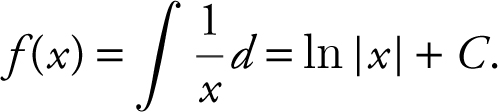
Given f (1) = 5; thus, ln (1) + C = 5 ⇒ 0 + C =5 or C = 5.
Thus, f (x ) = ln | x | + 5 and f (e ) = ln (e ) + 5 = 1 + 5 = 6.
11.7 Solutions to Cumulative Review Problems
21 . (a) At t = 4, speed is 5 which is the greatest on 0 ≤ t ≤ 10.
(b) The particle is moving to the right when 6 < t < 10.
22 . 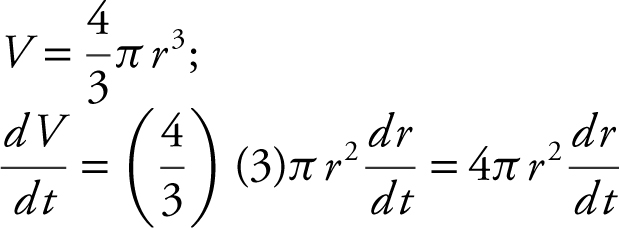
23 . Let u = ln x ; 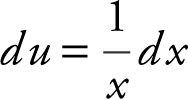 .
.
Rewrite: 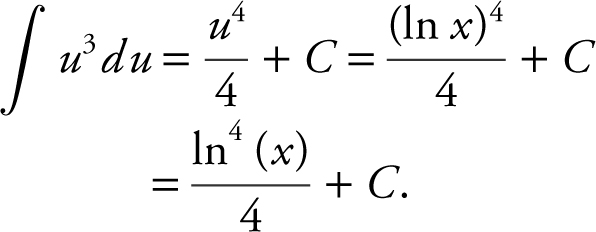
24 . Label given points as A, B, C, D, and E. Since f ″(x ) > 0 ⇒ f is concave upward for all x in the interval [0, 2]. Thus,  < f ′(x ) <
  = 1.5 and = 2.5. Therefore, 1.5 < f ′(1) < 2.5, choice (c). (See Figure 11.7-1 .)
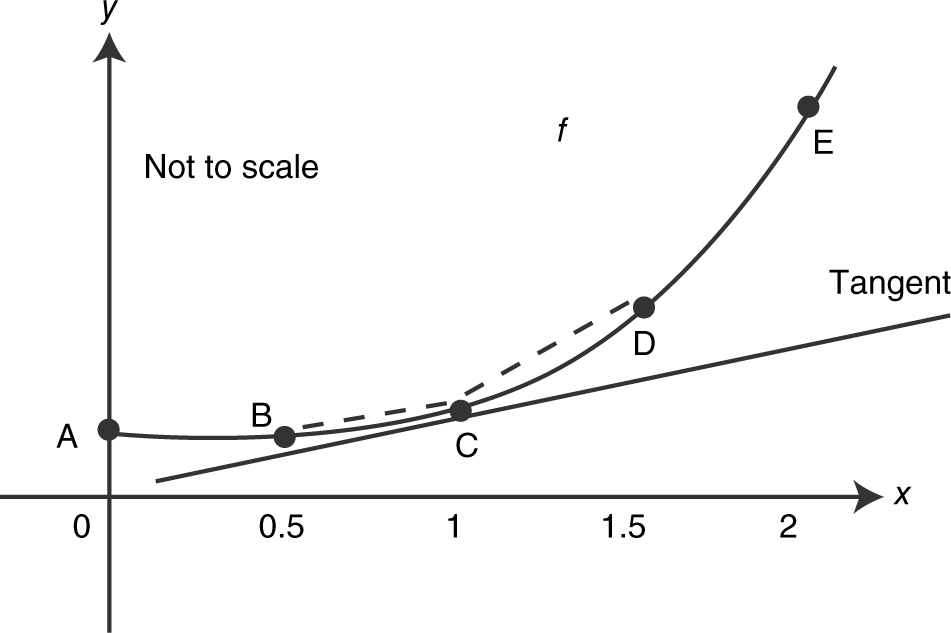
Figure 11.7-1
25 . (a) f ″ is decreasing on [1, 6) ⇒ f ″ < 0 ⇒ f ′ is concave downward on [1, 6) and f ′ is increasing on (6, 8] ⇒ f ′ is concave upward on (6, 8]. Thus, at x = 6, f ′ has a change of concavity. Since f ″ exists at x = 6 (which implies there is a tangent to the curve of f ′ at x = 6), f ′ has a point of inflection at x = 6.
(b) f ″ > 0 on [1, 4] ⇒ f ′ is increasing and f ″ < 0 on (4, 8] ⇒ f ′ is decreasing. Thus at x = 4, f ′ has a relative maximum at x = 4. There is no relative minimum.
(c) f ″ is increasing on [6, 8] ⇒ f ′ > 0 ⇒ f ′ is concave upward on [6, 8].