5 Steps to a 5 AP Calculus AB & BC, 2012-2013 Edition (2011)
Appendixes
FORMULAS AND THEOREMS
1. Quadratic Formula:
ax2 + bx + c = 0(a ≠ 0)
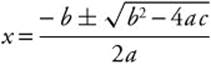
2. Distance Formula:

3. Equation of a Circle:
x2 + y2 = r2 center at (0, 0) and radius = r.
4. Equation of an Ellipse:
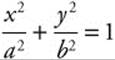 center at (0, 0).
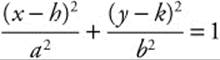 center at (h, k).
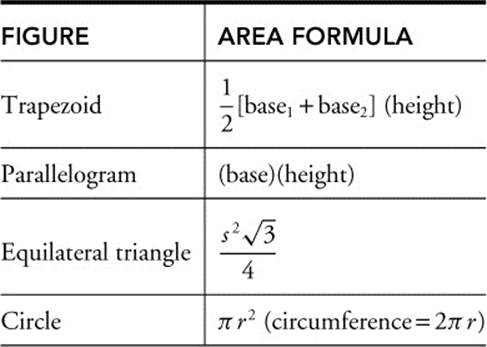
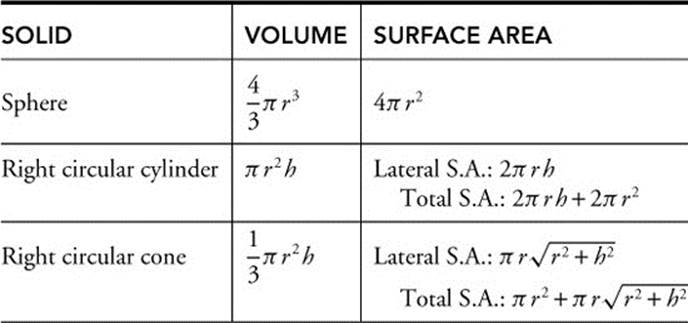
5. Area and Volume Formulas:
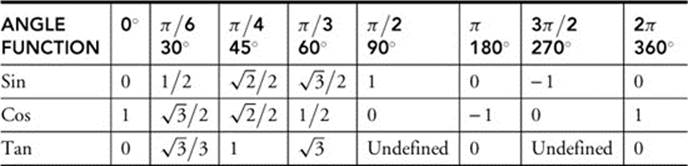
6. Special Angles:
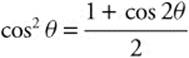
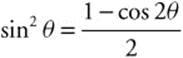
7. Double Angles:
• sin 2θ = 2 sin θ cos θ
• cos 2θ = cos2 θ − sin2 θ or 1 − 2 sin2 θ or 2 cos2 θ − 1.
• 
• 
8. Pythagorean Identities:
• sin2 θ + cos2 θ = 1
• 1 + tan2 θ = sec2θ
• 1 + cot2 θ = csc2 θ
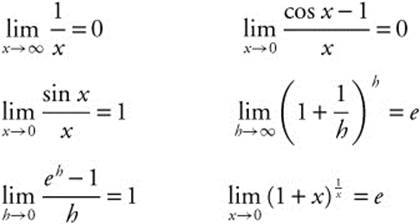
9. Limits:
10. Rules of Differentiation:
a. Definition of the Derivative of a Function:

b. Power Rule: 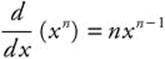
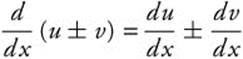
c. Sum & Difference Rules:
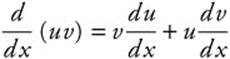
d. Product Rule:
e. Quotient Rule:
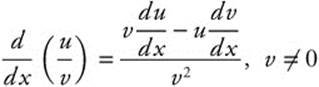
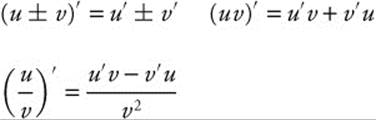
Summary of Sum, Difference, Product, and Quotient Rules:
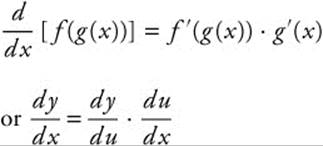
f. Chain Rule:
11. Inverse Function and Derivatives:

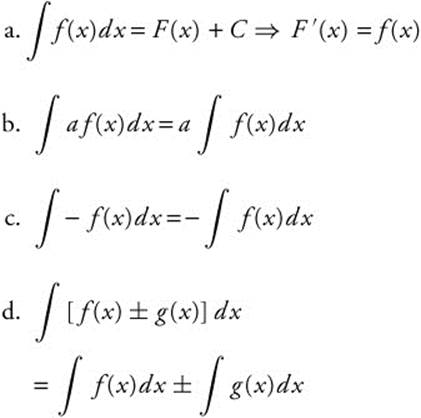
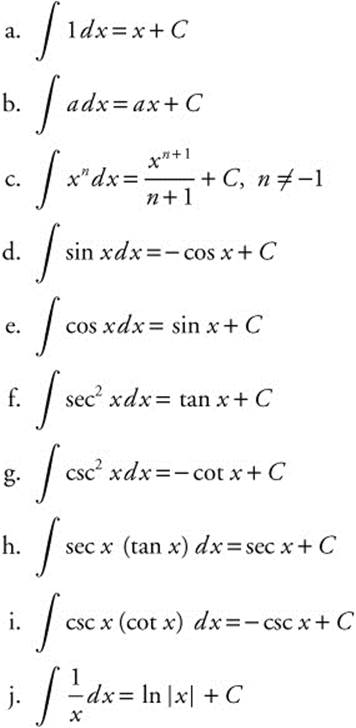
12. Differentiation and Integration Formulas: Integration Rules
Differentiation Formulas:
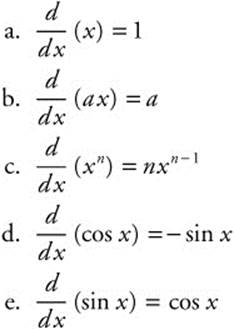
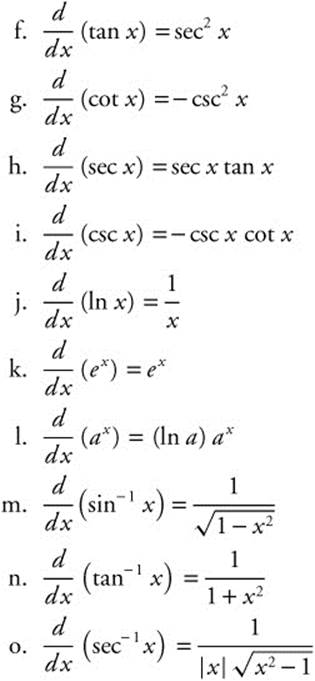
Integration Formulas:
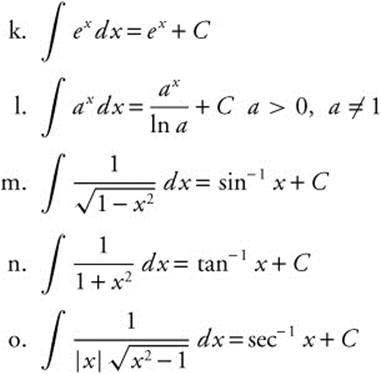
More Integration Formulas:
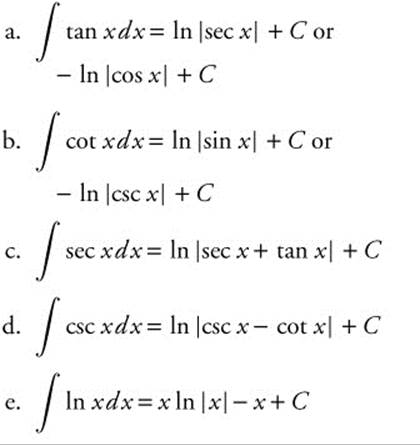
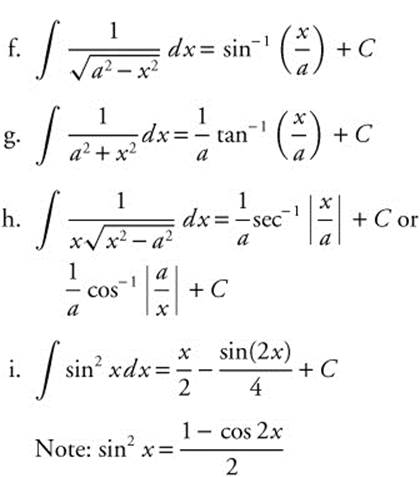
Note: After evaluating an integral, always check the result by taking the derivative of the answer (i.e., taking the derivative of the antiderivative).
13. Intergration by parts 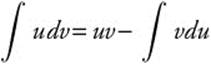 (and follow LIPET Rule).
14. The Fundamental Theorems of Calculus
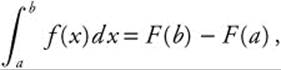
where F′(x) = f(x).

15. Trapezoidal Approximation:
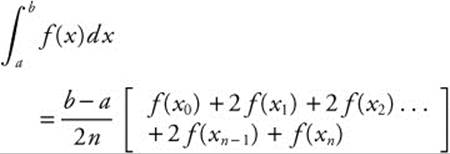
16. Average Value of a Function:
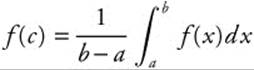
17. Mean Value Theorem:

Mean Value Theorem for Integrals:

in (a, b).
18. Area Bounded by 2 Curves:
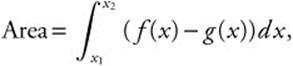
where f(x) ≥ g(x).
19. Volume of a Solid with Known Cross Section:
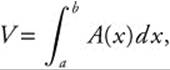
where A(x) is the cross section.
20. Disc Method:

21. Using the Washer Method:
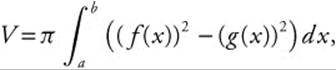
where f(x) = outer radius and g(x) = inner radius.
22. Distance Traveled Formulas:
• Position Function: 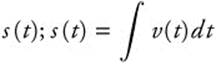
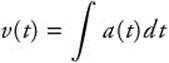
• Velocity:  ;
; 
• Acceleration: 
• Speed: |v(t)|
• Displacement from t1 to 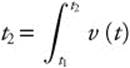 = s (t2) − s (t1).
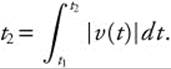
• Total Distance Traveled from t1 to
23. Business Formulas:
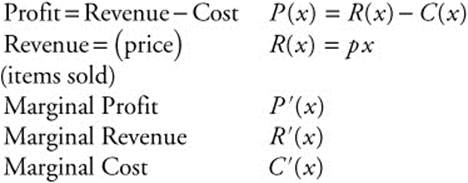
P′(x), R′(x), C′(x) are the instantaneous rates of change of profit, revenue, and cost respectively.
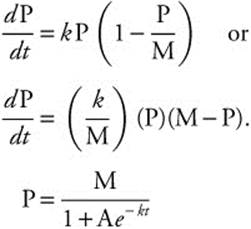
24. Exponential Growth/Decay Formulas:

25. Logistic Growth Models
26. Integration by Parts
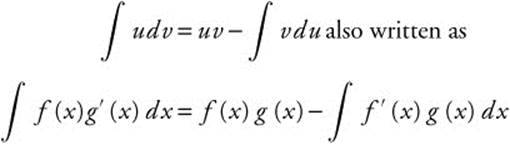
Note: When matching u and dv, begin with u and follow the order of the acronym LIPET (Logarithmic, Inverse Trigonometric, Polynomial, Exponential, and Trigonometric functions).
27. L’Hopital’s Rule
If 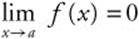 and
and 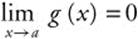 , or
, or 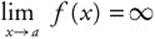 and
and 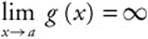 , then
 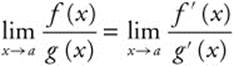 .
.
(Note that “a” may represent a constant or ±∞.)
28. Derivatives of Parametric Functions
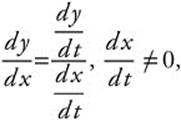
and
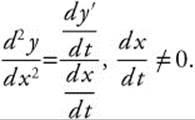
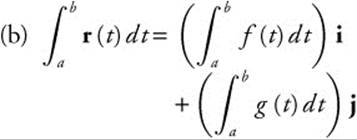
29. Vector Functions
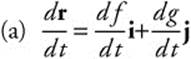
Given r (t) = f (t) i + g (t) j:
30. Arc Length of a Curve
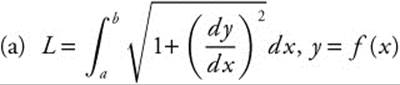
(b) Parametric Equations
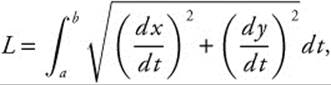
x = f(t) and y = g(t)
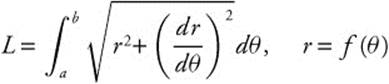
(c) Polar Equations
31. Polar Curves
(a) Slope of r = f θ at (r,θ)
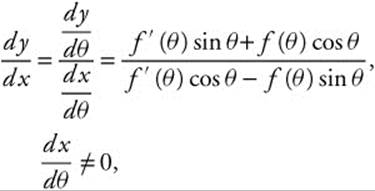
or written as 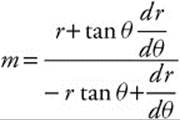 .
.
(b) Given r = f (θ) and α ≤ θ ≤ β, the area of the region between the curve, the origin, θ = α and θ = β:

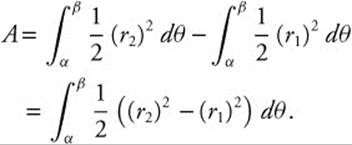
(c) Area between two Polar Curves:
Given r1 = f (θ) and r2 = g (θ), 0 ≤ r1 ≤ r2 and α ≤ θ ≤ β, the area between r1 and r2:
32. Series and Convergence
(a) Geometric Series
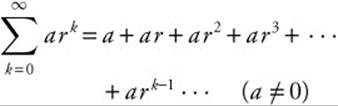
if |r| ≥ 1, series diverges;
if |r| < 1, series converges and the 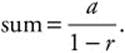
(Partial sum of the first n terms: 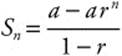 for all geometric series.)
(b) p-Series 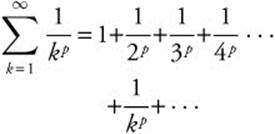
if p > 1, series converges;
if 0 < p ≤ 1, series diverges.
(c) Alternating Series  or
or  , where ak > = 0 for all ks.
Series converges if
(1) a1 ≥ a2 ≥ a3 … ≥ ak ≥ … and
(2) 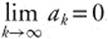
(Note: Both conditions must be satisfied before the series converges.)
Error Approximation:
If S = sum of an alternating series, and Sn = partial sum of n terms, then | error | = | S − Sn | ≤ an+1.
(d) Harmonic Series
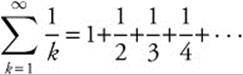 diverges.
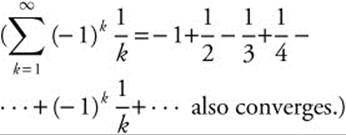
Alternating Harmonic Series
 converges.
33. Convergence Tests for Series
(a) Divergence Test
Given a series  , if
, if 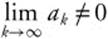 then the series diverges.
(b) Ratio Test for Absolute Convergence
Given  where ak ≠ 0 for all ks and let
 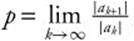 , then the series
(1) converges absolutely if p < 1;
(2) diverges if p > 1;
(3) needs more testing if p = 1.
(c) Comparison Test
Given  and
and  with ak > 0, bk > 0 for all ks, and a1 ≤ b1, a2 ≤ b2, … ak for all ks:
(1) If  converges, then converges.
(Note: that if the bigger series converges, then the smaller series converges)
(2) If  diverges, then
  diverges.
(Note: that if the smaller series diverges, then the bigger series diverges)
(d) Limit Comparison Test
Given  and
and  with ak > 0, bk > 0 for all ks, and let
 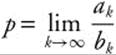 , if 0 < p < ∞, then both series converge or both series diverge.
(e) Integral Test
Given 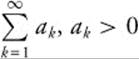 for all ks, and ak = f (k) for some function f(x), if the function f is positive, continuous, and decreasing for all x ≥ 1, then
  and
and 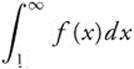 either both converge or both diverge.
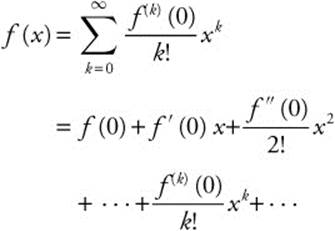
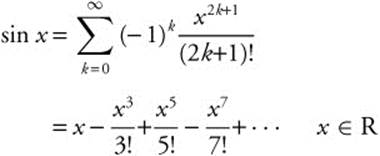
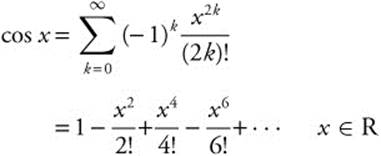
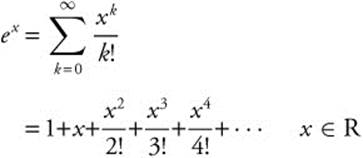
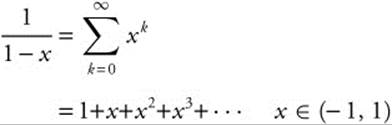
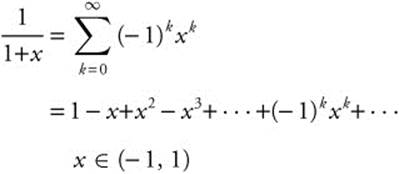
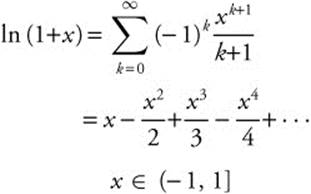
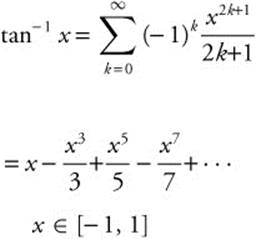
34. Maclaurin Series
35. Taylor Series
Partial Sum
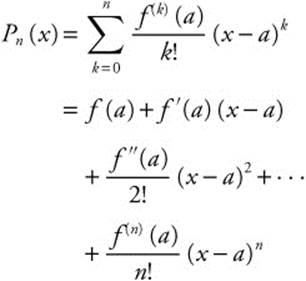
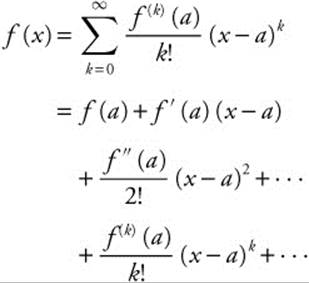
Rn (error for  , if x > a, c ∈ (a, x), or if x < a, c ∈ (x, a), of if x = a, c = a.
36. Testing a Power Series for Convergence Given
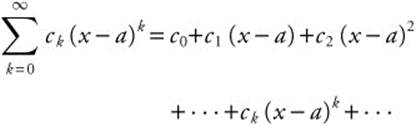
(1) Use Ratio Test to find values of x for absolute convergence.
(2) Exactly one of the following cases will occur:
(a) Series converges only at x = a.
(b) Series converges absolutely for all x ∈ R.
(c) Series converges on all x ∈ (a − R, a + R) and diverges for x < a − R or x > a+ R. At the endpoints x = a − R and x = a+ R, use an Integral Test, an Alternating Series Test, or a Comparison Test to test for convergence.